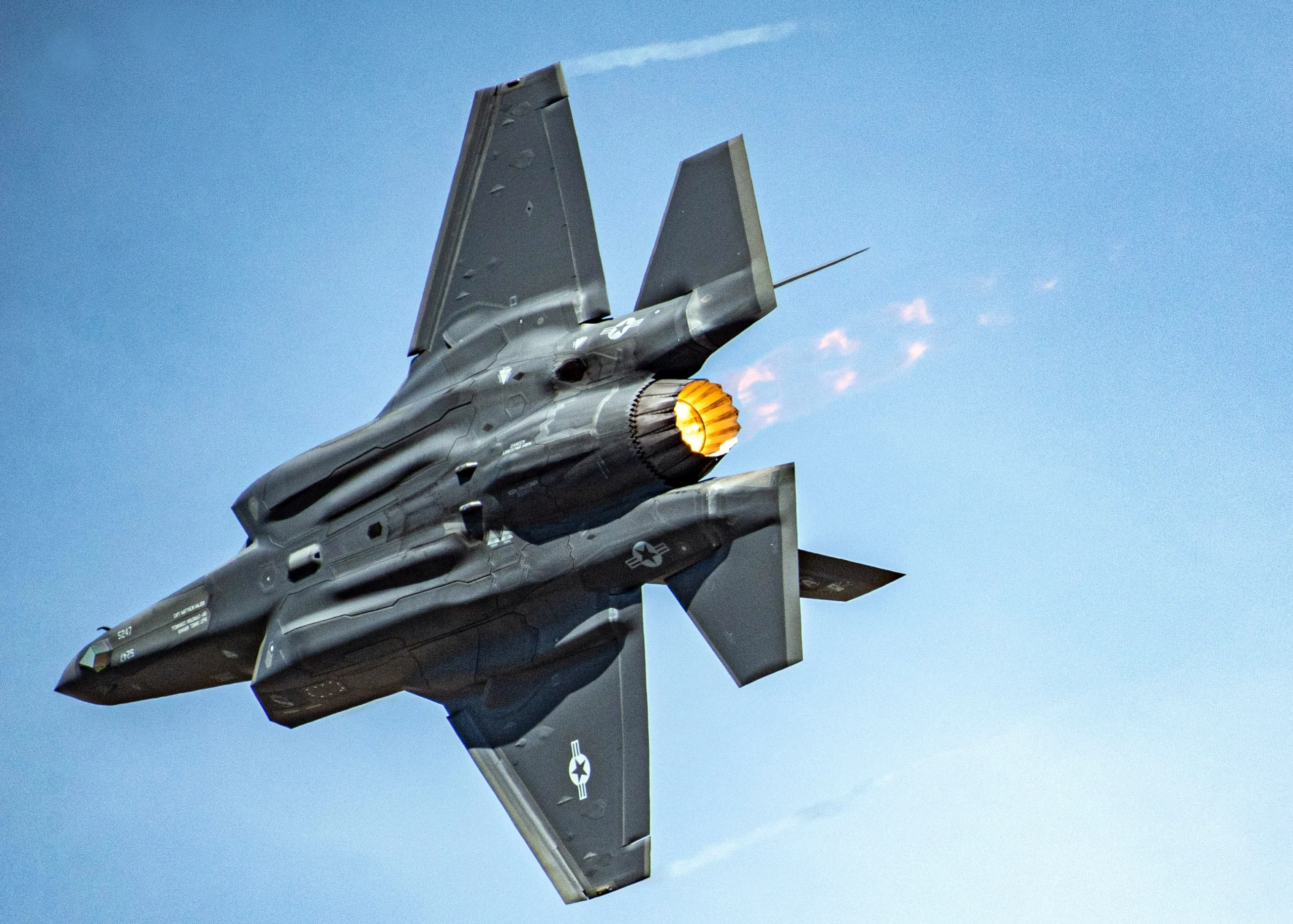
In a move that underscores the ongoing security tensions in Europe’s Arctic frontier, Norway scrambled two F-35A Lightning II fighters from Evenes Air Station on 15 April to intercept an unidentified aircraft approaching its northern airspace. The quick reaction alert mission, known as QRA, successfully identified the contact as a Russian Ilyushin Il-38 maritime patrol aircraft before the situation concluded without incident. The interception highlights how nations on NATO’s northern flank maintain constant vigilance against Russian military aviation activity in one of the world’s most strategically contested regions.
During the scramble, a Norwegian passenger jet was placed in a holding pattern to make way for the military alert, demonstrating the seriousness with which national defence takes priority over civilian air traffic. The two fifth-generation fighters remained airborne for roughly two hours before returning to their base at Evenes, allowing the commercial flight to resume normal operations. This kind of operational priority is standard across NATO, reflecting the alliance’s commitment to protecting member airspace from unauthorised intrusions.
Major Stian Roen, a spokesperson for the Norwegian Air Force, confirmed the sortie and characterised it as routine procedure. According to Roen, the pilots positively identified the unidentified contact as a Russian maritime surveillance platform designated under NATO nomenclature as the Il-38 “May”. The aircraft represents a legacy Soviet-era design that first took flight on 27 September 1961 and entered active service in 1967, yet Russia continues to operate approximately 58 airframes of the type for reconnaissance missions across the North Atlantic and Arctic regions.
Norway’s Quick Reaction Alert system reflects heightened Arctic security posture
Norway maintains a state of constant readiness along its border with Russia, positioning two F-35A fighters on round-the-clock alert at Evenes Air Station. When an unknown aircraft approaches Norwegian territory, the QRA team can have those jets airborne within approximately 15 minutes, ready to identify, document, and prevent any violation of sovereign airspace. This system has proven essential given the frequency of Russian military operations near Norwegian boundaries.
The statistics paint a picture of sustained pressure on Norway’s air defence resources. The Norwegian Air Force has logged 19 QRA scrambles so far this year, during which pilots have identified 28 aircraft in total. Monday’s interception fits within an established pattern of Russian military aviation operating near—and occasionally probing the boundaries of—Norwegian airspace as part of broader surveillance activities in the High North. Norway’s geographic position, sharing a land border with Russia in the Arctic Finnmark region, places the nation on NATO’s front line in this strategically significant theatre.
The F-35A Lightning II, manufactured by Lockheed Martin, has become the cornerstone of Norway’s air sovereignty mission. Norway has fully transitioned from its legacy F-16 fleet and now relies exclusively on the fifth-generation platform for its QRA rotation and broader air defence requirements. The aircraft’s advanced sensor suite, low-observable design characteristics, and superior speed make it exceptionally well-suited for rapid intercept operations in the demanding Arctic environment, where extreme weather conditions and extended periods of darkness complicate the early identification of unknown contacts at distance.
Scrambles like Monday’s are characterised by Norwegian defence officials as routine, yet the volume of such missions reveals the persistent operational demands placed on the country’s fighter force. Each alert requires skilled aircrew to launch on short notice, often during challenging weather or reduced visibility conditions typical of the Arctic. The intercept mission itself demands precision navigation, positive aircraft identification using both visual and electronic means, and careful documentation for intelligence purposes.
The Russian Il-38 that triggered Monday’s alert was successfully identified and tracked until the Norwegian F-35s returned to Evenes Air Station. Throughout the approximately two-hour engagement, the Russian aircraft remained outside Norwegian territorial airspace, though its proximity to the border was sufficient to warrant immediate military response. The encounter ended without escalation, though the Norwegian (DY) passenger flight experienced the operational disruption of waiting in a holding pattern before receiving clearance to land.
These routine intercepts serve multiple purposes beyond the immediate task of airspace protection. They signal NATO resolve to Russia, demonstrate the readiness of Norway’s defence apparatus to allies, and gather intelligence on Russian capabilities and operational patterns in the Arctic. Each QRA mission also provides valuable training for Norwegian pilots and ground crews, keeping them sharp for scenarios that might require more urgent responses. As geopolitical tensions persist in the High North and Russia continues to project military power in the region, Norway’s commitment to maintaining round-the-clock fighter alert rotations remains a defining feature of its national security strategy—one that shows no signs of diminishing.