Tensions between Washington and Beijing over Taiwan have escalated sharply once again, with China flatly rejecting US accusations of military intimidation against the island nation and condemning what it calls deliberate misrepresentation of facts. Speaking to reporters in Beijing this week, Chen Binhua, spokesperson for China’s Taiwan Affairs Office, delivered a forceful rebuttal to American claims, insisting that the United States is engaging in what he termed a “complete distortion” of the situation in the Taiwan Strait.
The rhetoric reflects deepening fractures in one of the world’s most sensitive geopolitical standoffs. China views Taiwan as a breakaway province and has dramatically intensified military manoeuvres around the democratic island in recent months, conducting multiple rounds of war games and live-fire drills. Yet Beijing continues to frame these operations as routine exercises rather than threatening posturing—a characterisation that Washington and Taipei strongly dispute. For our readers following this developing situation, understanding the nuances of these competing narratives is essential to grasping what could become one of the defining security crises of our time.
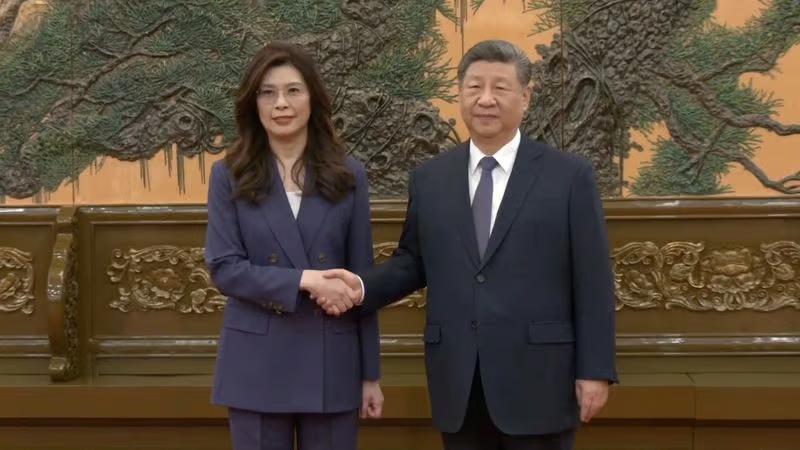
The US State Department had called on China to engage in direct dialogue with Taiwan and cease what American officials describe as relentless military and political pressure on the island. This appeal came following a high-profile diplomatic visit by Taiwan’s opposition leader, Cheng Li-wun of the Kuomintang party, to Beijing, where she met with President Xi Jinping. Rather than backing down, Beijing doubled down on its messaging, with Chen arguing that the United States harbours “malicious intentions” in repeatedly raising these concerns.
What makes this moment particularly fraught is the categorical refusal by Beijing to acknowledge Taiwan’s current leadership. China refuses to engage with Taiwan President Lai Ching-te, dismissing him as a “separatist” and separatist sympathiser. Lai, for his part, has consistently rejected Beijing’s sovereignty claims, emphasising that only the Taiwanese people themselves can determine their island’s political future. This impasse leaves little room for the kind of direct dialogue that might de-escalate tensions through conventional diplomatic channels.
The Taiwan military pressure debate intensifies as Beijing and Washington clash over strategy
During her visit to mainland China, Cheng spoke optimistically about pursuing a “path of peace” and suggested that reconciliation between Beijing and Washington remained possible. She noted that China had unveiled certain measures aimed at benefiting ordinary Taiwanese citizens, including the easing of export controls on food products. However, these gestures occurred alongside continued military activities circling the island, suggesting that Beijing’s approach combines carrots with sticks—offering economic incentives while maintaining a clear military threat.
The timing of Cheng’s visit is significant. Her trip preceded a planned visit by US President Donald Trump, raising questions about whether the opposition leader was attempting to establish channels that might facilitate broader American-Chinese cooperation on the Taiwan question. Cheng herself expressed hope that China and the United States could find common ground and work together constructively, signalling that at least some elements within Taiwan’s political establishment see merit in dialogue rather than confrontation.
Yet President Lai struck a notably different tone when addressing his own Democratic Progressive Party shortly after Cheng’s remarks. He unequivocally stated that “peace cannot be achieved by compromising and conceding sovereignty”, making clear that any settlement of the Taiwan question cannot come at the expense of the island’s autonomy. Lai framed his party’s foundational principles around “love, peace and non-violence,” but left no doubt that these values do not extend to surrendering Taiwan’s democratic achievements or self-determination.
Beijing’s messaging has evolved somewhat in recent weeks, with Chinese officials emphasising what they call the benefits of “peaceful reunification”—a shift in rhetoric if not in substantive policy. Chen painted reunification not merely as a political objective but as an economic advantage for ordinary Taiwanese, pointing to potential cost-of-living reductions and infrastructure improvements that might accompany integration with mainland China. He framed national reunification as both “a great moral cause” and one offering tangible material benefits to the Taiwanese people.
The reality on the ground tells a different story, however. China has never renounced the use of force as a means of bringing Taiwan under its control, and military pressure continues unabated despite diplomatic overtures. As we have reported previously, the frequency and sophistication of Chinese military exercises around Taiwan have grown considerably, with live-fire drills conducted as recently as late December demonstrating Beijing’s capacity and willingness to maintain pressure on multiple fronts simultaneously.
Another flashpoint remains US arms sales to Taiwan, which China has repeatedly and vehemently demanded Washington cease. Despite the absence of formal diplomatic relations between Washington and Taipei, the United States remains Taiwan’s most crucial international backer, and military aid remains a cornerstone of this relationship. Beijing sees continued American weapons transfers as an infringement on Chinese sovereignty and as evidence that Washington remains committed to preventing reunification—an interpretation that fuels Chinese resentment and hardens positions on both sides.
As these tensions persist and multiply, the international community watches nervously. The stakes could hardly be higher, involving not only the future of Taiwan and its 23 million people, but also broader questions about regional stability in Asia-Pacific, the sanctity of democratic governance, and whether Beijing or Washington will ultimately prevail in what increasingly appears to be a protracted strategic competition. For South Africans observing from afar, this unfolding drama carries implications for global trade, security alliances, and the future international order itself.