Germany is making significant moves on the global stage whilst managing crises at home, with Chancellor Friedrich Merz front and centre at the Hannover Messe trade fair this week alongside Brazilian President Luiz Inácio Lula da Silva. The two leaders have pledged substantial financial commitments to climate action, though their separate tours of the industrial showpiece have raised eyebrows among organisers unaccustomed to such diplomatic theatre.
The headline announcement came as Brazil confirmed that Germany would contribute approximately €700 million (roughly R$4.2 billion) to climate and sustainable mobility projects through its state development bank BNDES. This funding commitment emerged during Lula’s two-day state visit to Germany, which also encompassed broader discussions on raw materials, defence technology, and environmental protection. A further €200 million declaration of intent for sustainable mobility investments was also signed, underscoring Berlin’s long-standing partnership with Brasília on forest protection and climate finance.
Yet the visit has not proceeded without its awkward moments. As we reported, trade fair organisers expressed surprise when Merz and Lula chose to tour the Hannover Messe separately on Monday, with neither appearing keen on a joint public appearance. A planned joint statement on trade — potentially highlighting the newly provisionally applied EU-Mercosur free trade agreement — was quietly cancelled. The frostiness reflects cooling relations under Merz’s more conservative administration, particularly following his controversial comments last November about Belém, where he suggested the entire German delegation had been eager to depart the Brazilian city hosting COP30.
Germany and Brazil chart climate course whilst tensions simmer over trade
Despite the diplomatic chill, the two governments did find common ground on Middle East security. A jointly-signed declaration expressed “deep concern over ongoing conflicts in the Middle East, including the impact on freedom of navigation in the Strait of Hormuz,” with both nations “strongly encouraging progress toward a substantive negotiated settlement on Iran.” The statement reflects growing anxiety about disruptions to global fuel supplies since US-Israel strikes on Iran began in late February, sending oil prices spiralling and threatening supply chains worldwide.
Merz himself sought to calm German anxieties about energy security at the trade fair. “For the moment, the market situation is tense, but supply in Germany is secure,” he told reporters, adding that the National Security Council would address the matter directly in coming days. He emphasised that “security of supply is a top priority for Germany” and promised action if circumstances deteriorated. Critics, however, have pointed out that renewable energy transition funds have been diverted from their intended purpose, leaving Germany more exposed to precisely these kinds of supply shocks.
Domestically, Germany’s Interior Minister Alexander Dobrindt presented positive crime statistics on Monday, announcing that the national crime rate dropped by 5.6% in 2025 compared to the previous year. Violent crime fell by 2.3% and theft declined by 6.5%, with cannabis legalisation cited as a factor in reducing drug-related offences. However, sexual assault reports jumped 8.5%, a rise experts attribute partly to growing cultural acceptance of victims coming forward rather than an actual surge in offences. Notably, 98.6% of suspects in sexual assault and rape cases were men, with the vast majority being current or former intimate partners.
The interior ministry also flagged concerns about emerging threats. Child sexual abuse imagery cases increased, partly driven by the rise of AI-generated pornography, presenting a troubling frontier for law enforcement. These findings carry particular weight given Merz’s government has faced criticism for implying immigrants were behind a crime wave — a narrative unsupported by the actual statistical evidence.
On the sporting front, more than 500 Stuttgart supporters were detained following a mass brawl with Bayern Munich fans outside the Allianz Arena on Sunday night after Bayern clinched their 35th Bundesliga title. Police deployed 300 officers but said the scale of the incident — involving approximately 1,000 supporters — exceeded their capacity to apprehend both groups.** Describing the clash as appearing “planned” rather than spontaneous, authorities noted that only Stuttgart fans were taken into custody due to insufficient personnel.
Germany’s Olympic ambitions also took a step forward as the German Olympic Sports Confederation (DOSB) announced that 66% of voters backed a potential bid to host the Summer Olympics in 2036, 2040, or 2044 under the “CologneRhineRuhr” banner, with Cologne as the lead city supported by surrounding municipalities. The DOSB reportedly favours the 2036 date, which would mark a century since the 1936 Berlin Games and provide modern Germany an opportunity to demonstrate how far the nation has come. Cologne will face competition from Berlin, Munich, and Hamburg domestically, before competing internationally against bids from Qatar, Turkey, India, Chile, and South Africa.
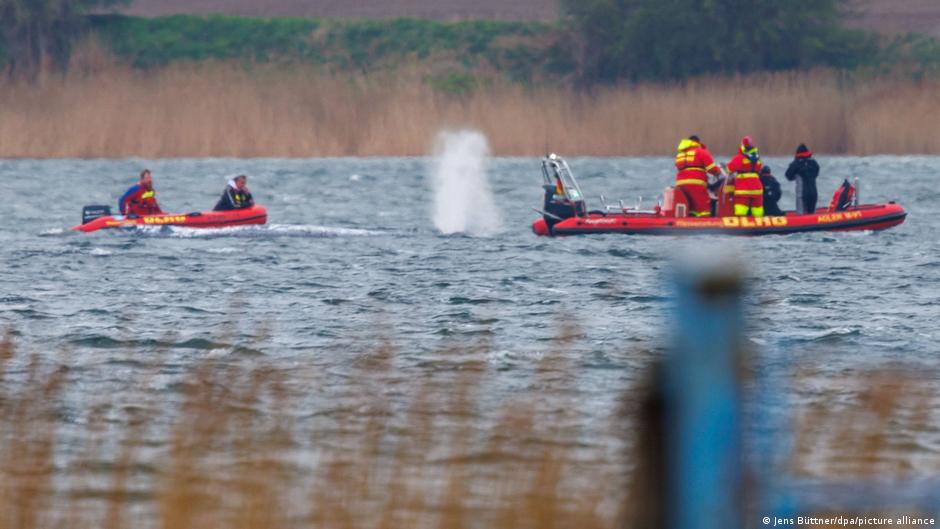
On a lighter note, the rescue efforts to free a 15-metre humpback whale — nicknamed “Timmy” — stranded in Wismar Bay off Germany’s Baltic coast have captured the nation’s attention. The marine mammal, trapped since March 31, managed to cover 3 kilometres southward on Monday morning under its own power after previous intervention attempts had stalled. The shift was attributed to rising water levels and strengthening winds, with rescue teams now fitting a tracking device to guide him toward the open ocean. The saga has generated such widespread German interest that some broadcasters dedicated round-the-clock video coverage to the creature’s ordeal.
The week ahead will test both Germany’s diplomatic dexterity and its ability to manage overlapping crises — from global supply chain disruptions to the unfinished business of rescuing a wayward cetacean. As we continue to monitor developments, the challenge for Merz’s government remains clear: securing energy supplies, deepening international partnerships, and restoring public confidence in its stewardship of the nation’s future.