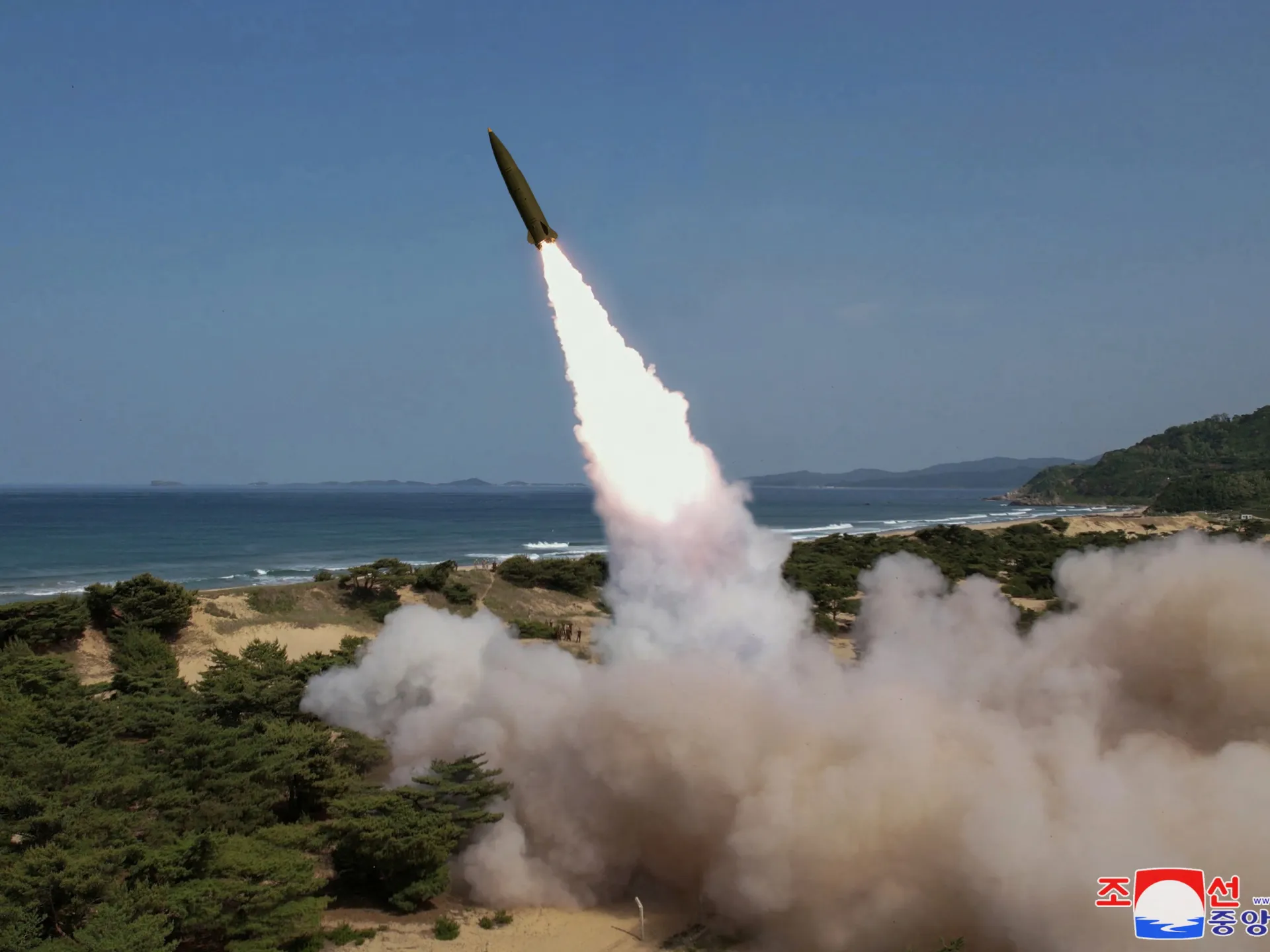
Tensions on the Korean Peninsula have escalated once again, with North Korea conducting a fresh ballistic missile launch over the weekend in what’s become an increasingly familiar pattern of military posturing. The reclusive state fired multiple ballistic missiles from the Sinpo area on its eastern coast on Sunday morning, marking the seventh such test this year and the fourth launch just within April alone. Both South Korea and Japan confirmed the incident, raising fresh concerns about regional stability and the effectiveness of international diplomatic efforts to contain North Korea’s weapons programme.
The missiles were launched from positions near Sinpo at approximately 6:10am local time on Sunday, according to statements issued by South Korea’s military. Japanese authorities indicated that the projectiles likely came down off the east coast of the Korean Peninsula, though they confirmed no incursion into Japan’s exclusive economic zone. This distinction matters more than it might initially appear—it suggests North Korea is maintaining a calculated approach to avoid direct escalation with Tokyo, even as it continues defying international pressure.
What’s particularly striking about this latest launch is the frequency and consistency. We’re now seeing North Korea test its ballistic capabilities at an alarming rate, with nearly two launches every month so far this year. Each test represents a direct violation of United Nations Security Council resolutions, yet Pyongyang continues to dismiss these restrictions as infringements on its sovereign right to self-defence. The irony is thick—a nation claiming victimhood whilst simultaneously pursuing one of the world’s most aggressive military modernisation programmes.
South Korea’s response has been measured but firm. Seoul’s presidential office convened an emergency security meeting to assess the situation, whilst the defence establishment bolstered surveillance operations across the peninsula. Crucially, South Korea’s military emphasised its close coordination with both Washington and Tokyo, underscoring the trilateral intelligence-sharing arrangements that have become essential to monitoring North Korean activities.
North Korea’s ballistic missile tests defy international protocols as regional tensions mount
The timing of this launch is perhaps as significant as the launch itself. These tests coincide with preparations for a major US-China summit scheduled for mid-May, where President Donald Trump and Chinese leader Xi Jinping are expected to discuss North Korea amongst other pressing geopolitical matters. Observers have long noted that Pyongyang often times provocative actions to coincide with major diplomatic moments, essentially inserting itself into conversations where it might otherwise be sidelined.
Adding to the growing alarm is recent intelligence regarding North Korea’s nuclear capabilities. Rafael Grossi, head of the International Atomic Energy Agency, made headlines on Wednesday by stating that North Korea has achieved “very serious” advances in its ability to manufacture nuclear weapons, with evidence suggesting the development of a new uranium enrichment facility. This isn’t mere speculation—it’s a formal assessment from the world’s primary nuclear watchdog, and it paints a picture of a weapons programme that’s accelerating rather than slowing.
Further underlining the intransigence of the regime, North Korean leader Kim Jong Un declared his country’s nuclear-armed status irreversible just last month. In statements that brooked no ambiguity, Kim insisted that expanding what he termed a “self-defensive nuclear deterrent” was absolutely essential to national security. The language here reveals a fundamental gap between how Pyongyang views its arsenal and how the international community does—one sees existential protection, the other sees an ongoing threat to regional and global security.
The challenge facing Western powers and our regional partners is evident. Traditional sanctions have failed to deter North Korea, and diplomatic channels remain largely frozen. South Korea and Japan find themselves in the uncomfortable position of living on the frontline of this confrontation, whilst simultaneously being among the first to experience the consequences of any miscalculation. The repeated ballistic missile tests serve as grim reminders that despite decades of international pressure, North Korea’s weapons ambitions remain not merely intact but increasingly advanced.
As we move through April and beyond, the international community faces a sobering reality: North Korea’s ballistic missile programme continues to mature regardless of global condemnation, and there appears little appetite within Pyongyang for genuine dialogue that might lead to meaningful restraint. The question haunting policymakers in Seoul, Tokyo, and Washington is no longer whether North Korea will test again, but rather when—and whether the next provocation might finally trigger a response that fundamentally alters the precarious balance currently maintained across the Korean Peninsula.