Explosive testimony at the Madlanga Commission has revealed deeply inflammatory private communications between prominent figures, with leaked WhatsApp messages presented today showing dismissive and derogatory language directed at EFF leader Julius Malema. The messages, which surfaced during proceedings, contain references that have sparked immediate controversy and raised serious questions about the nature of behind-the-scenes political discourse in South Africa.
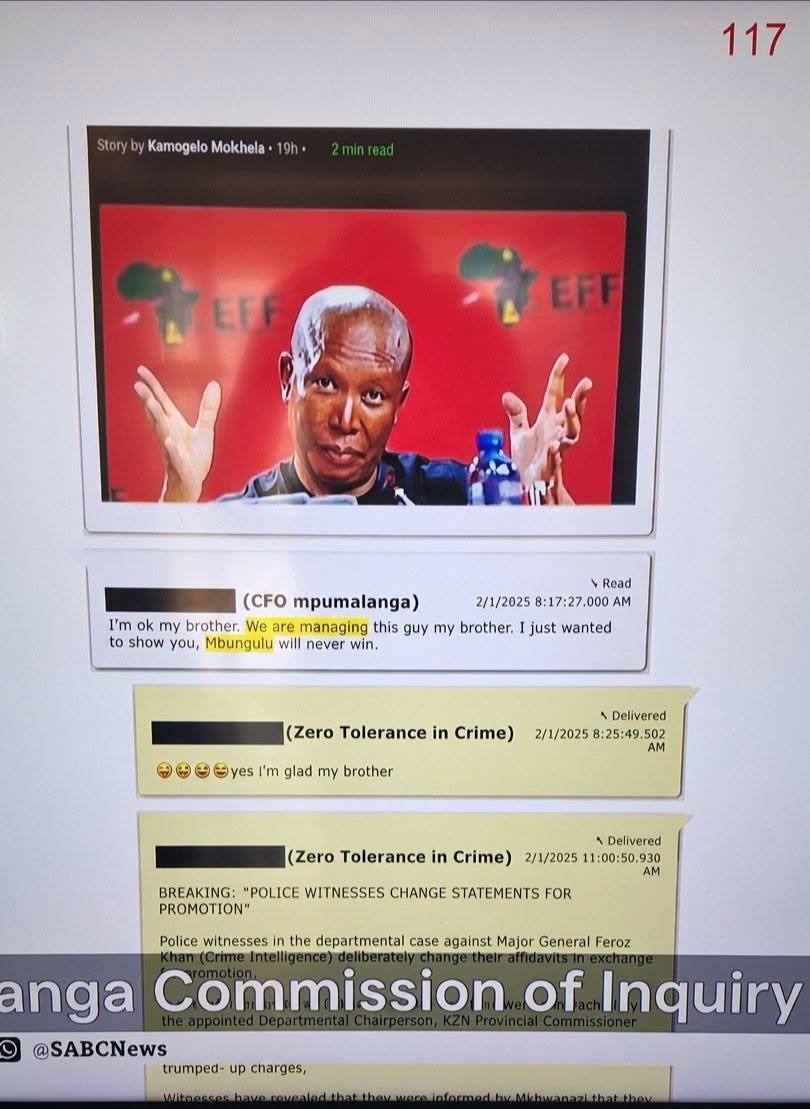
According to the evidence presented, Fannie Nkosi — a figure known for his “Zero Tolerance in Crime” stance — and Gareth Mnisi exchanged messages in which they referred to Malema using a derogatory isiZulu term. The specific language used was “Mbungulu,” which translates to “bedbug” in English, marking a significant departure from professional political dialogue and into territory that observers say reflects a troubling pattern of personal attacks rather than policy-based criticism.
One of the more revealing messages quoted at the Commission read: “We are managing this guy my brother… Mbungulu will never win.” The tone and content of the exchange suggest a level of coordination and confidence between the two men, implying they believed they had some mechanism or strategy in place to contain or undermine Malema’s political ambitions. This casual dismissal, coupled with the use of insulting terminology, has raised eyebrows among legal observers and political analysts monitoring the Commission’s work.
The Madlanga Commission, which has been investigating various matters of public interest, has become something of a focal point for exposing the informal networks and private communications that shape South African politics. These leaked messages offer a rare glimpse into how some political actors discuss their counterparts when they believe they’re speaking in confidence, away from public scrutiny.
WhatsApp messages reveal casual contempt in South African political circles
What’s particularly striking about these leaked WhatsApp communications is not just their crude nature, but what they suggest about the broader political landscape. The messages indicate that there were discussions happening in private channels that went far beyond standard political opposition. Instead, what we’re seeing is evidence of individuals who felt emboldened enough to use dehumanising language about a major political figure, seemingly without concern about the message being discovered or becoming public.
The use of animal-related insults has a long and uncomfortable history in political discourse globally, but it carries particular weight in the South African context, where such language has historically been weaponised during moments of deep political tension. The fact that these messages were exchanged and later presented as evidence at an official Commission suggests that someone within these networks felt it was important enough to document and eventually expose.
Nkosi’s involvement is noteworthy given his public positioning around crime and law and order issues. As someone who has built a public profile around strict approaches to criminal justice, questions are now being raised about the gap between his public persona and his private communications. The Commission’s decision to present these messages indicates they’re considered relevant to whatever investigation or inquiry is underway, though the full context of why they matter to the Commission’s mandate remains to be clarified.
The political ramifications of this leak are potentially significant. For the EFF and Malema himself, the messages provide fresh ammunition to argue that they’re being systematically undermined by coordinated efforts within establishment circles. For those who might have been working with Nkosi or Mnisi, the exposure raises awkward questions about association and judgment. And for the broader South African public watching these developments unfold, it’s another reminder that what happens in private group chats can have very public consequences.
The Commission’s presentation of this evidence also highlights the increasing role of digital communications in political investigations. WhatsApp messages, once considered ephemeral and private, are now being treated as serious legal evidence that can be introduced in formal proceedings. This shift has implications for how all political actors conduct themselves online, knowing that their communications could potentially become part of the public record.
As these proceedings continue at the Madlanga Commission, we’re likely to see more of these private communications come to light. Whether this particular set of messages leads to any formal action, disciplinary consequences, or simply serves as a moment of embarrassment for those involved remains to be seen. What’s clear, however, is that South Africa’s political conversations — both public and private — are becoming increasingly transparent, whether the participants like it or not.