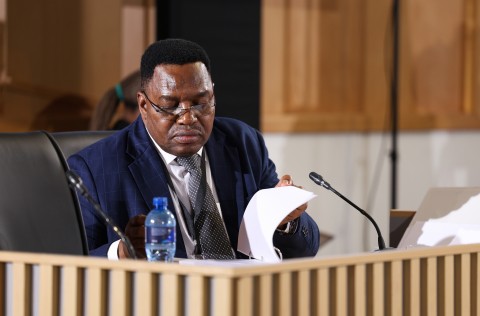
Police National Commissioner Fannie Masemola is set to make a court appearance on Tuesday amid mounting pressure on President Cyril Ramaphosa to suspend him from his position. The top cop faces serious allegations tied to a controversial tender process that has rocked the South African Police Service (SAPS), and the case has evolved into one of the most significant corruption investigations targeting the upper echelons of the country’s law enforcement establishment. As we monitor this developing story, what’s become clear is that the charges against Masemola extend far beyond a single dodgy contract — they speak to systemic failures in accountability at the highest levels of SAPS.
The charges levelled against the Police National Commissioner centre on alleged breaches of the Public Finance Management Act, with the Investigating Directorate Against Corruption asserting that he failed in his fiduciary duties as the SAPS accounting officer. That’s a critical distinction: Masemola was entrusted with protecting and accounting for the service’s budget, a responsibility that goes to the heart of good governance in our public institutions. Instead, according to the investigators, he allowed a deeply questionable tender process to proceed unchecked — one that ultimately benefited connected businessman Vusimuzi ‘Cat’ Matlala.
The R360-million tender scandal and alleged corruption at SAPS
At the core of this investigation is a controversial R360-million tender that has become emblematic of how corruption can take root within our security services. The bidding process kicked off on 31 January 2024, with 22 bids received in total. Three months later, on 29 April 2024, the Bid Evaluation Committee prepared a report recommending the appointment of Medicare24 Tshwane District — a decision that would ultimately channel substantial funds to Matlala’s interests.
What makes this case particularly troubling is the pattern of alleged impropriety that followed the contract award. Money was transferred to Matlala on 14 June 2024, but the real scandal emerged when it became apparent that individuals overseeing the tender process had received personal benefits. Rachel Matjeng, who held the position of Section Head of Quality Management at SAPS, allegedly received a weight loss drug worth between R4,500 and R5,000 per unit from Matlala, along with approximately R300,000 in cash.
The timeline also raises serious questions about Masemola’s oversight. He only cancelled the contract in May 2025 — nearly a year after the original tender was awarded — following a final audit report that exposed the irregularities. Our sources indicate this delay has been central to the state’s case against him, with prosecutors arguing that his failure to act sooner constituted a dereliction of duty as accounting officer.
Alongside Masemola, twelve police officers have already been charged in connection with the tender process. They appeared in court on 25 March, signalling that the net of accountability is widening beyond just the top brass. This suggests the investigation has uncovered a web of complicity rather than isolated incidents of misconduct.
The pressure on President Ramaphosa to take action has been intensifying. Various stakeholders and opposition figures have called for Masemola’s immediate suspension, arguing that someone facing such serious allegations has no business leading the country’s police service. However, legal experts have raised questions about the constitutional grounds for suspension, complicating what might otherwise seem like a straightforward governance issue.
What’s clear is that this case will have significant implications for public trust in SAPS and the broader fight against corruption in government. Whether the courts find Masemola culpable or not, the reputational damage to the police service is already substantial. As we await Tuesday’s court appearance, South Africans will be watching closely to see whether our justice system can hold even the most senior officials accountable for breaches of the public trust that demand nothing less than our unwavering commitment to transparency and the rule of law.