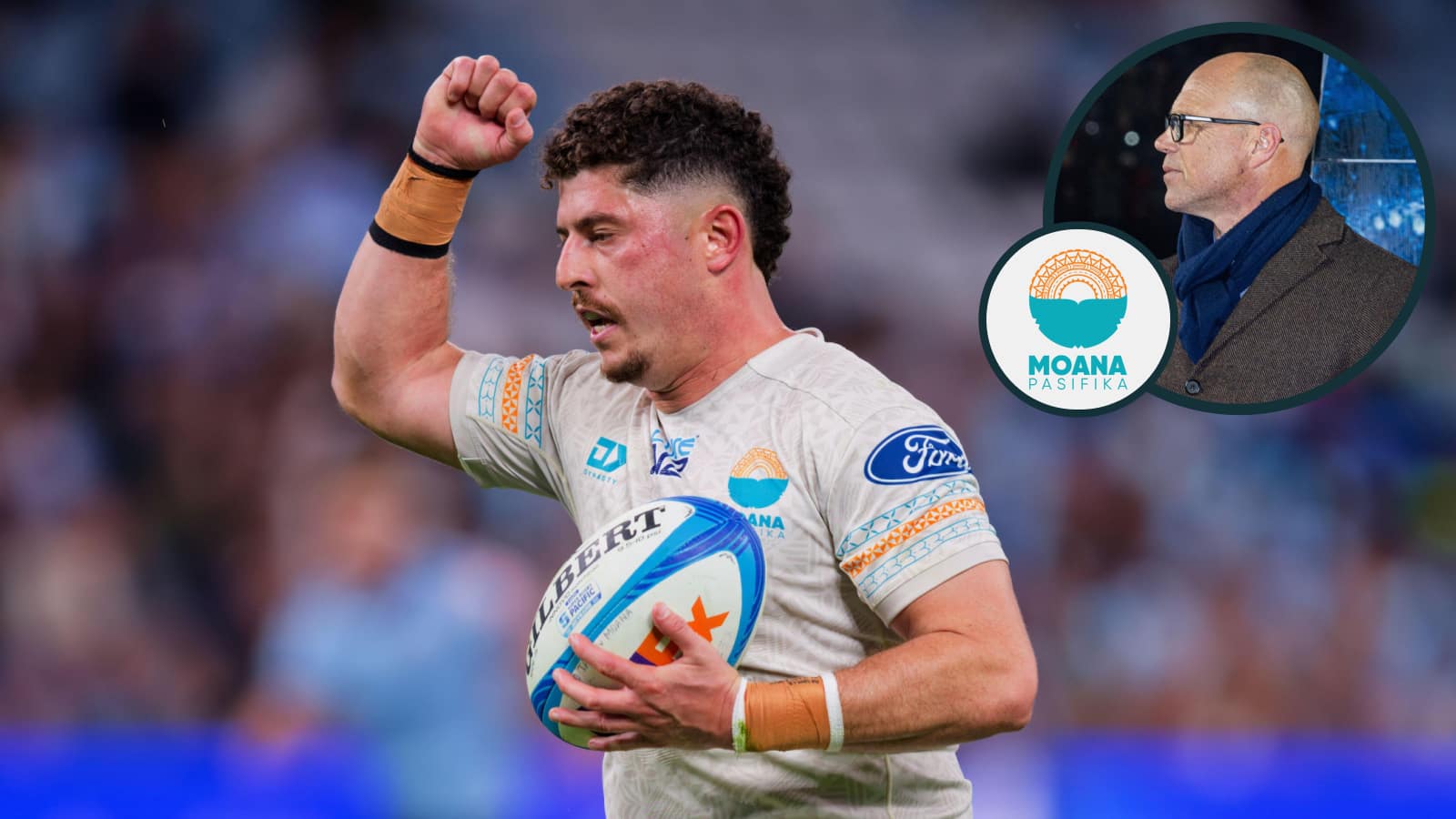
Moana Pasifika’s impending collapse at the end of the Super Rugby Pacific season has sent shockwaves through rugby circles in the Pacific region, with prominent figures from New Zealand’s rugby fraternity now openly debating what went wrong and who should shoulder the responsibility of saving the embattled franchise. Just last week, the club’s ownership informed players and staff that financial backing would dry up once the current campaign concludes, leaving dozens of athletes scrambling to secure moves elsewhere — unless a last-minute rescue materialises.
The news has clearly struck a nerve amongst those who invested emotionally and professionally in what was meant to be a game-changing venture for Pacific Island rugby. Mils Muliaina, the former All Blacks full-back, didn’t mince words when discussing the situation on Sky Sport’s Breakdown programme, describing the collapse as “really gut-wrenching” and pointing to a fundamental structural problem that plagued the organisation from day one. According to Muliaina, the club was essentially set up to fail — a well-intentioned but poorly executed experiment that lacked the foundational planning necessary for long-term viability.
“It was set up with a lot of emotion; there needed to be a team,” Muliaina explained. “Was it set up properly? Possibly not.” He highlighted how PMA, the initial investor, lost significant funding midway through their ownership, effectively pulling the rug from under the organisation. What particularly frustrated Muliaina was the absence of a coherent recovery strategy, with questions remaining about whether World Rugby and New Zealand Rugby should inject capital to stabilise the venture before it’s too late.
Ex-fly-half Stephen Donald took a slightly different stance, arguing that saving Moana Pasifika wasn’t just a nice-to-have but an absolute necessity — particularly when viewed through the lens of the broader international rugby landscape. His reasoning is compelling: with World Rugby having expanded the upcoming Rugby World Cup to include a round-of-16 knockout stage, Pacific Island nations like Tonga and Samoa need to maintain competitive rugby systems to field respectable teams in that tournament.
Why Moana Pasifika’s financial collapse matters for the future of Pacific Island rugby
“Without doubt, they need to be saved, but from a bigger picture point of view, World Rugby needs to step in,” Donald stated during the same discussion. His argument hinges on the undeniable contribution Pacific Island players have made to global rugby over decades — a debt that surely comes with responsibility. Should Tonga and Samoa fall away as competitive rugby nations due to the collapse of grassroots development structures, the entire integrity of the expanded World Cup format could be compromised, leaving gaping holes in the tournament’s knockout rounds.
Donald’s position is that World Rugby has a moral and practical obligation to invest in Pacific Island rugby infrastructure, whether that means propping up Moana Pasifika directly or funding academies in Samoa and Tonga. The game’s governing body benefits enormously from the talent and star power these nations produce, so it’s only fair that investment flows backwards into development pathways.
However, Jeff Wilson, the legendary All Blacks winger, offered a more nuanced critique that zeroes in on what he sees as the franchise’s fundamental identity crisis. According to Wilson, Moana Pasifika lost sight of its original mission almost immediately — rather than functioning as a genuine Pacific Island team based in either Samoa or Tonga, it morphed into what amounts to a sixth New Zealand Super Rugby franchise headquartered in Auckland.
“Everyone almost accepts that this has become a sixth New Zealand team,” Wilson observed bluntly. The club’s inability or unwillingness to relocate to the islands meant it could never truly serve its intended purpose: creating a sustainable development pathway for young Pacific Island players with genuine connections to their homelands. Instead, it became just another Auckland-based outfit competing for New Zealand talent — a model that was always destined to fail given the financial pressures facing all domestic franchises.
Wilson’s criticism extended to the organisation’s strategic priorities over the past five years. Rather than obsessing over win-loss records — which only made sense if you were trying to compete as a “proper” New Zealand team — the focus should have been on establishing roots in the Pacific and building something meaningful and permanent. “The organization initially focused too much on winning games of rugby versus actually finding a home,” he explained, pointing to a misalignment between stated objectives and actual implementation.
When it comes to the financial bailout question, Wilson is adamant that New Zealand Rugby cannot be expected to absorb the costs alone. All New Zealand Super Rugby teams are projected to lose money this year, and NZR has already poured millions into Moana Pasifika over the past five years without achieving sustainable results. It wouldn’t be fair or feasible to ask the domestic governing body to keep “dipping into that well” when it’s already stretched thin funding its own grassroots structures, including the NPC competition which demands substantial annual investment.
Instead, Wilson advocates for a genuine collective effort involving World Rugby, SANZAAR, and New Zealand Rugby — but crucially, any rescue package must come with a binding commitment to the original vision. A one-year financial injection won’t cut it; what’s needed is a long-term structural solution that gets Moana Pasifika rooted in the Pacific, with proper governance frameworks and realistic growth projections. Without that, throwing more money at the problem would simply be repeating the mistakes of the past five years.
The broader tension at play here reflects a growing disconnect between rugby’s global ambitions and its willingness to properly fund development in emerging markets. Pacific Island nations have enriched international rugby immeasurably — their players are integral to tier-one nations’ success, and their unique playing style has captivated audiences worldwide. Yet when it comes to investing in the systems that produce these players, rugby’s power brokers have often dragged their feet. Moana Pasifika’s collapse is perhaps the most visible symptom of this chronic underinvestment, but it certainly won’t be the last unless attitudes shift dramatically at the highest levels of the sport.