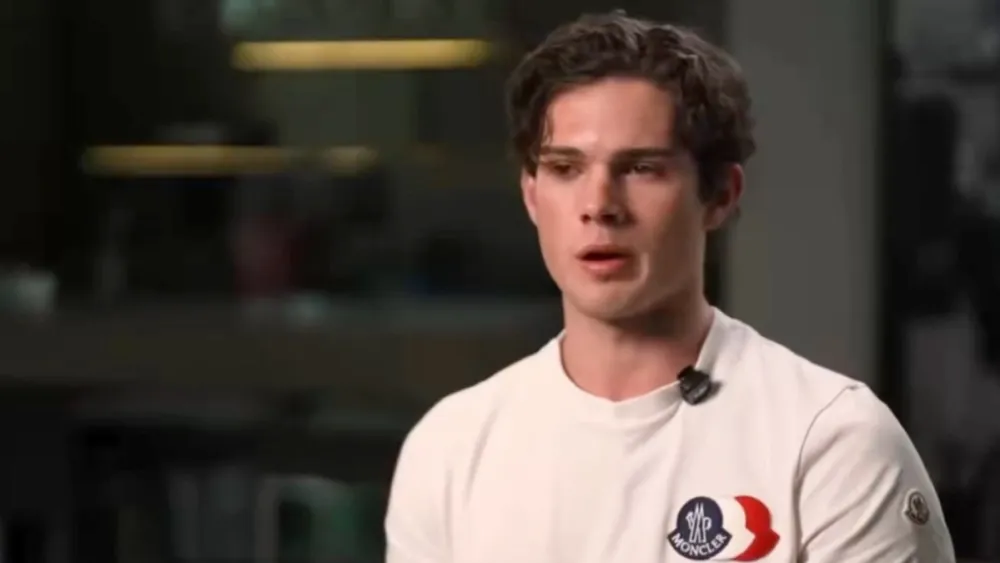
Braden Peters – the internet personality better known as Clavicular – stormed off a live interview with “60 Minutes Australia” after being pressed about his connection to the incel community. The episode, which has quickly circulated across social media platforms, raised fresh questions about the line between self‑improvement content and extremist online subcultures, a line that South African youth are increasingly navigating.
During the segment, correspondent Adam Hegarty asked Peters whether he identified as an incel. “Do I identify as an incel?” Peters replied, visibly irked. “How could you ask me that after talking about my relationships with women? That’s, quite literally, the worst sequence of questions I’ve ever heard.” The South African audience, accustomed to heated debates around gender identity and online masculinity, responded with a flood of comments demanding clarity.
Hegarty tried to reframe the query, noting that looksmaxxing – a term popularised within certain fringe forums – originated from the incel lexicon. “Looksmaxxing was obviously a term created by the incel community. How do you feel about being linked to that group?” he pressed. Peters countered that looksmaxxing is simply about self‑improvement, arguing that its purpose is to help people move beyond the incel label, not to reinforce it. “It’s about ascending out of that category,” he said, before the interview spiralled.
The host shifted focus to Peters’ association with the controversial “manosphere” figure Andrew Tate, who is currently facing rape, assault and human‑trafficking charges in the United Kingdom. Hegarty asked why Peters chose to spend time with an individual under such serious allegations. Peters’ reply was defensive and pointed: “I see you want to make this political. Too bad I didn’t have time to look into who your wife cheated with,” he retorted, before being reminded that Hegarty is not married. The exchange ended with Peters telling the journalist, “So I could teach you about looksmaxxing, and then maybe you could switch that up. Thanks for the time, appreciate the interview,” before walking out.
The incident has struck a chord in South Africa, where the rise of look‑max channels and “self‑optimisation” content mirrors a broader global surge in men‑only echo chambers. Local influencers on platforms such as TikTok and YouTube often blend workout tips, grooming guides, and confidence‑building advice with more polarising ideologies. Our sources indicate that the South African Digital Economy Minister has already flagged the need for clearer regulations on content that can potentially promote extremist narratives, though no specific legislation has been enacted yet.
Social‑media users in Cape Town, Johannesburg and Durban have taken to Twitter and Reddit to debate whether Peters’ departure was a justified act of self‑preservation or an avoidance of accountability. One Johannesburg user wrote, “If you’re not an incel, don’t let the media paint you that way,” while a Cape Town commentator argued that looksmaxxing content can sometimes serve as a gateway to more toxic communities. The dichotomy reflects a tension that South African policymakers and mental‑health professionals have been grappling with since the pandemic accelerated online engagement.
Legal experts caution that while freedom of expression is a cherished right in our constitution, the line between lawful speech and hate‑fueling propaganda can be blurry. Dr Thandi Mphahlele, a professor of media law at the University of the Witwatersrand, explained that “if a content creator deliberately aligns with groups that incite violence or discrimination, they may fall foul of the Promotion of Equality and Prevention of Unfair Discrimination Act.” However, she added that proving such intent remains challenging, especially when creators cloak their messaging in personal‑development jargon.
The episode also shines a light on the global reach of Australian media and its impact on South African audiences. “60 Minutes Australia” is broadcast on local TV partners and streamed on platforms popular among South Africans, meaning that the interview’s fallout will likely reverberate far beyond its original market. As we reported earlier, cross‑border media exposure often fuels local discourse on gender, identity and digital culture, prompting both praise and criticism.
The broader conversation about looksmaxxing and incel affiliations is not confined to niche forums. Recent surveys by the South African Institute of Race Relations suggest that approximately 12 % of male respondents aged 18‑29 admit to regularly consuming content that encourages “self‑enhancement through appearance” as a primary means of gaining social acceptance. While not all participants label themselves as incels, many acknowledge exposure to rhetoric that frames women as obstacles to personal success. These findings underscore the need for nuanced public education on digital literacy.
From a journalistic perspective, Peters’ abrupt exit illustrates the challenges reporters face when probing contentious subjects. Hegarty’s line of questioning, aimed at unpacking the relationship between self‑improvement narratives and extremist ideologies, was met with resistance – a reaction not uncommon when dealing with subjects who curate their personas meticulously. Our newsroom’s coverage will continue to monitor how influencers balance personal branding with accountability, especially when legal proceedings against figures like Andrew Tate dominate headlines.
Looksmaxxing incel interview sparks debate in the South African online community – an apt headline that captures the crux of the story – has already prompted calls for more responsible content moderation on local platforms. Influencers, advertisers, and regulators alike are being urged to consider how seemingly innocuous advice on grooming or fashion can inadvertently normalise harmful worldviews. As the digital landscape evolves, South Africans must remain vigilant, ensuring that the pursuit of confidence does not become a conduit for extremist thought.
In the weeks ahead, we expect further analysis from experts in psychology, law and digital policy, as well as a possible response from Peters himself. For now, the incident serves as a reminder that the intersection of self‑improvement and extremist subcultures is a fragile one, and that both creators and journalists have a responsibility to navigate it with care and transparency.