Nigerian Man’s Bold Claims About RDP Houses Ignite Fury Across South Africa
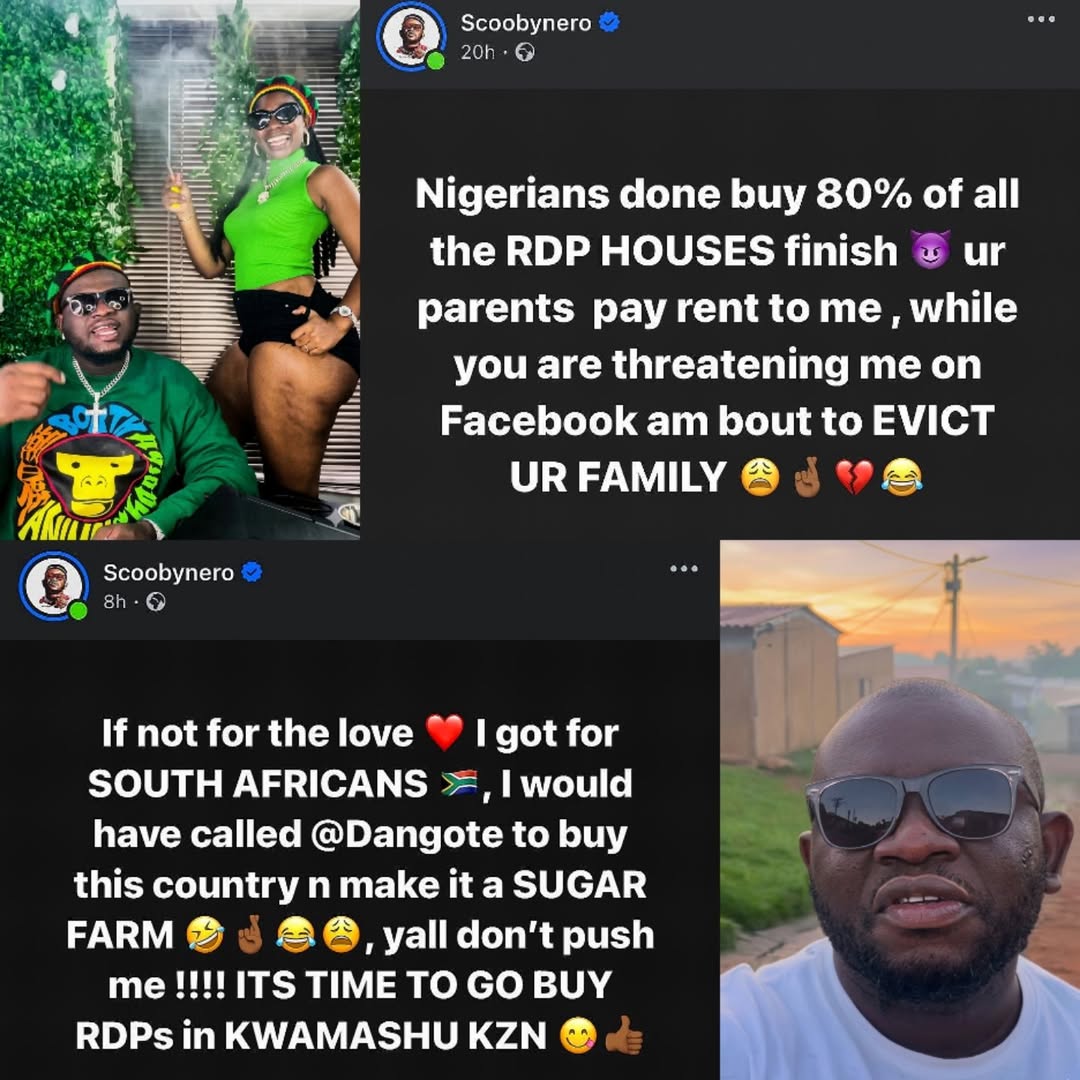
A Nigerian national has set social media ablaze after making explosive claims about owning a significant portion of South Africa’s government-subsidized housing. The man, who goes by the name Scoobynero on Facebook, boldly stated that “Nigerians have bought 80% of all RDP houses” — a claim that has sent shockwaves through communities and sparked fierce debate online.
The post quickly went viral, drawing massive backlash from South Africans who view RDP housing as a lifeline built specifically for previously disadvantaged citizens. The reaction was swift, emotional, and deeply concerned — and for good reason.
Scoobynero did not stop at the ownership claim. He went further to reveal that some South African parents are currently renting from him, essentially living under the roof of a foreign national in houses meant to uplift local communities. This detail alone intensified public anger, raising uncomfortable questions about how the system is being exploited.
Nigerian Man Threatens Evictions and References Aliko Dangote in Chilling Social Media Posts
Perhaps the most alarming part of his post was the threat of eviction. He warned that any South African who dared challenge him could find their family thrown out onto the street. The tone was unapologetic, even confrontational — and it did not go unnoticed.
In a separate post that many found equally disturbing, Scoobynero claimed that the only thing stopping him from contacting Aliko Dangote — the Nigerian billionaire widely regarded as Africa’s richest man — to “buy the whole country and turn it into a sugar farm” was his so-called love for South Africans. Critics saw this as a thinly veiled threat wrapped in mockery.
He also announced plans to expand his property interests, stating it was “time to go buy RDPs in KwaMashu, KZN.” KwaMashu is a densely populated township in KwaZulu-Natal, home to thousands of working-class South Africans who rely on affordable housing.
RDP houses, funded entirely by South African taxpayers, are part of a government initiative launched to provide dignified shelter to low-income citizens who were historically denied proper housing. The very idea that these homes could be purchased, resold, or rented out by foreign nationals cuts at the heart of that mission.
South Africans across the political spectrum reacted with fury online. Many called on the Department of Human Settlements to investigate the matter urgently and enforce existing laws that prohibit the illegal sale or transfer of RDP houses. Under current legislation, beneficiaries are not permitted to sell their RDP homes within eight years of receiving them — a rule that appears to be widely ignored.
The incident has reignited a broader national conversation about housing policy loopholes, illegal sales of government-subsidized properties, and the role of foreign nationals in South Africa’s housing market. Community leaders and housing advocates have long warned that corrupt middlemen and uninformed beneficiaries are allowing these homes to slip out of deserving hands.
Whether Scoobynero’s claims are factual exaggerations meant to provoke or a genuine reflection of a deeper systemic problem remains unclear. What is undeniable, however, is that this incident has exposed a critical vulnerability in South Africa’s housing system — one that government authorities can no longer afford to ignore if they hope to protect the dignity and security of the citizens these homes were always meant to serve.