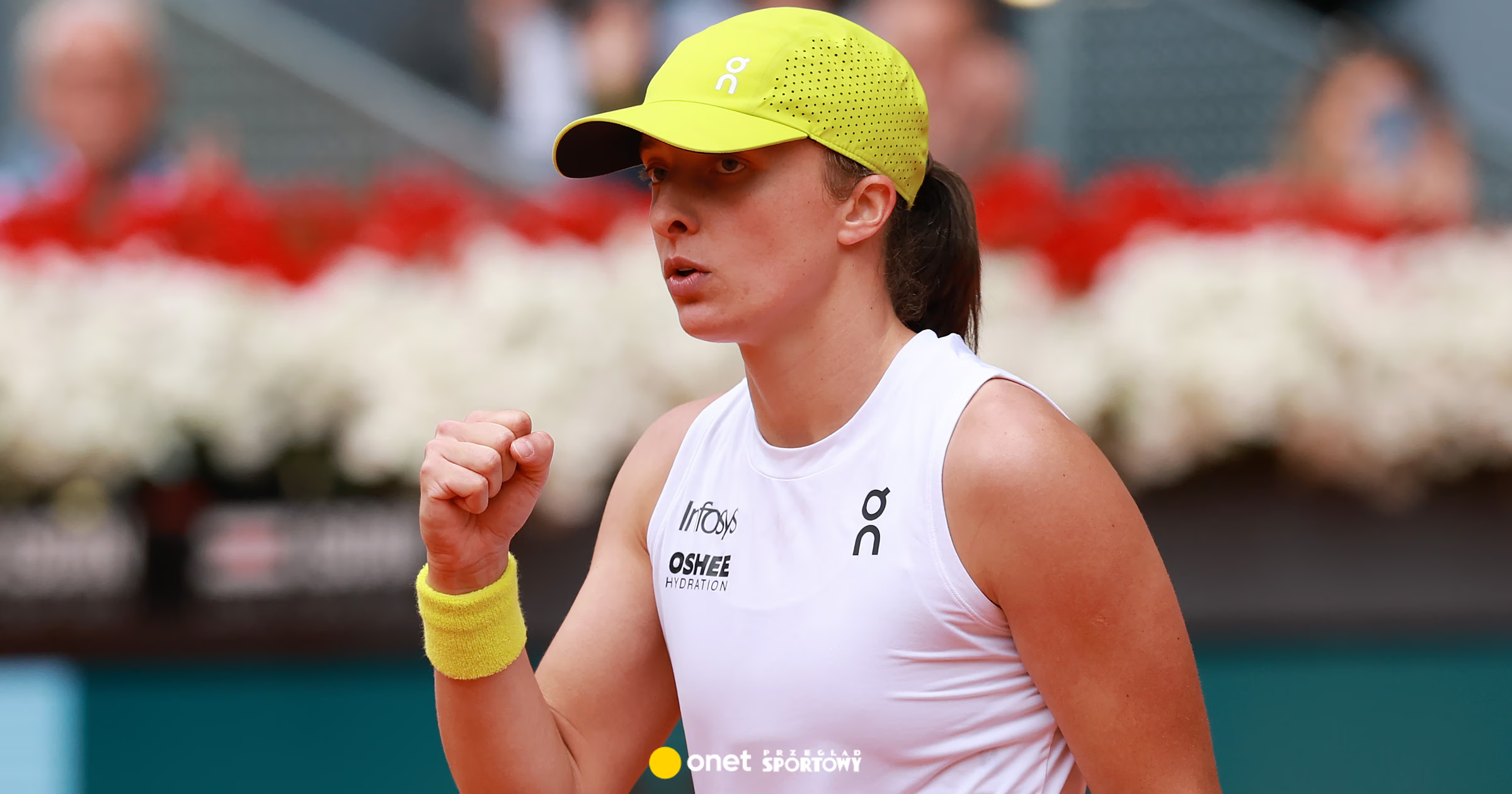
The Mutua Madrid Open has long been celebrated as one of tennis’s most exclusive spectacles, offering fans a rare privilege that few tournaments can match: the chance to watch the world’s elite players train live from the stands. This week in the Spanish capital, tennis enthusiasts have been treated to something genuinely special—an intimate glimpse into the preparation methods of Poland’s Iga Świątek, and what they’ve witnessed suggests significant tactical evolution is underway for the rising star.
From Monday through Wednesday, spectators lined the practice courts to observe Świątek’s meticulous groundwork, and the picture that emerged was striking. Her coach, Francisco Roig, operates in a distinctly hands-on manner, approaching his charge frequently throughout sessions to offer real-time feedback and technical adjustments. This isn’t the typical passive coaching style you might expect at a major tournament—Roig is actively engaged, constantly demonstrating corrections and refinements to the way Świątek executes her shots.
One technical adjustment stood out most prominently across both training sessions: Roig is orchestrating a substantial overhaul of Świątek’s forehand. The Spanish coach repeatedly emphasised the importance of torso rotation before the forehand stroke, demonstrating the precise mechanics he wants to see embedded into her game. It’s the kind of focused, granular work that suggests Świątek’s team believes her forehand holds the key to unlocking her next level of performance.
Iga Świątek’s tactical evolution points to a more aggressive, Spanish-influenced approach
What’s perhaps most intriguing about these training observations is the broader philosophy they reveal. Świątek appears to be adopting a playing style inspired by Rafael Nadal’s legendary approach to tennis—a shift toward grinding exchanges, relentless court coverage, and the ability to force opponents into unforced errors through sheer consistency rather than raw power. This represents a deliberate departure from the aggressive baseline play that dominated her recent matches.
Speaking to journalists at Madrid’s Caja Magica complex earlier this week, Świątek herself alluded to these strategic changes. She referenced her recent training block on Majorca, where she deliberately focused on slowing the pace of rallies and improving her decision-making during extended exchanges. “Tennis evolves, and you cannot do the same things,” she explained to press, noting that maintaining consistency during longer baseline rallies has become increasingly crucial to modern competitive success.
Beyond the forehand modifications, another critical element of Roig’s coaching blueprint involves restructuring Świątek’s serve. Former professional Michał Dembek, who runs the prominent Sofa Sportowa account on X, observed that Roig appears to be shortening Świątek’s serving motion while simultaneously increasing wrist engagement and eliminating unnecessary arm extension. These adjustments aim to create greater stability in the so-called “trophy position”—the critical moment when a player reaches the apex of their toss before initiating the downward swing.
The Madrid tournament marks Świątek’s first real competitive test under this newly refined tactical framework. Her opening match comes Thursday against Ukraine’s Daria Snigur, a player known for her upset victory over Simona Halep at the 2022 US Open and, more recently, for her impressive qualifier run that culminated in a surprise victory over Daria Kasatina. The pair will take centre court no earlier than 13:00, offering Świątek an opportunity to test whether these weeks of technical refinement translate into tangible court success.
The changes Roig has implemented reflect a fundamental philosophical shift—one that suggests Świątek’s team believes her path forward lies not in hitting harder, but in outthinking her opponents, controlling rallies with superior positioning, and wearing down competitors through relentless pressure. Whether Madrid will be the stage where this newly reimagined Świątek emerges remains to be seen, but what we witnessed in training suggests something genuinely significant is taking shape.