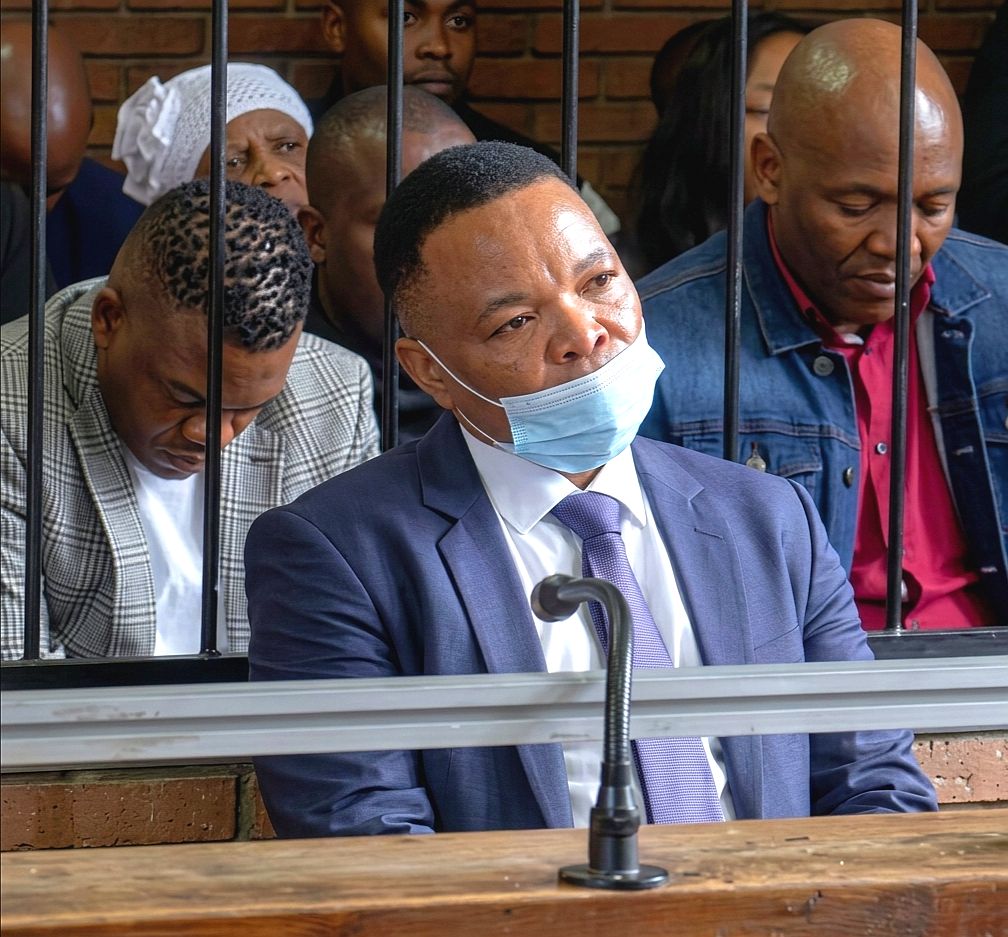
A high-earning professional facing serious legal charges made an emotional plea to the courts this week, arguing that his family’s financial stability depends on his release on bail. The man, who earns R200,000 monthly and serves as the sole breadwinner for his household, painted a picture of desperation as he outlined his circumstances before the judge — a narrative that sits at the heart of one of South Africa’s ongoing legal dramas.
The accused, identified as Lerutla, detailed his financial position with precision during the bail application proceedings. With his wife currently unemployed and no other income source supporting their household, he stressed that remaining in custody would place his family in severe financial hardship. It’s a common refrain heard in South African courtrooms, where economic vulnerability often intersects with the justice system, leaving families caught in the middle of legal proceedings.
According to statements made during the hearing, Lerutla is currently awaiting results from his Unisa master’s degree programme. This detail appears to underscore his commitment to self-improvement and rehabilitation — factors that typically carry weight in bail considerations. The pursuit of further education, magistrates and judges often reason, demonstrates a person’s intent to build a legitimate future and contribute meaningfully to society.
The circumstances of his arrest added another layer to his testimony. He was taken into custody at OR Tambo International Airport, an event he described as happening “in front of my family and friends.” This public apprehension, he suggested to the court, had already caused considerable embarrassment and distress to those closest to him. Such details matter in bail applications, where character and community standing are frequently evaluated.
Lerutla’s legal strategy became apparent when he announced his intention to plead not guilty to the charges against him. This declaration signalled that he plans to contest the allegations through the court process, rather than accepting guilt. His defence rested substantially on assertions that posed no danger to the community or to the judicial process itself.
Lerutla’s bail application hinges on claims of community safety and financial hardship
Throughout his testimony, Lerutla systematically addressed standard bail conditions and concerns. He stated categorically that no protection orders have been issued against him, a factor that could suggest an absence of violence allegations or threats towards specific individuals. He further asserted that “no one will be endangered if I am released on bail,” attempting to dismantle any argument that public safety would be compromised by his temporary freedom.
The question of flight risk — whether an accused might flee the country to avoid prosecution — represents another critical element in bail hearings. Lerutla confronted this head-on, declaring his intention to remain in South Africa. “I don’t intend to immigrate from South Africa,” he told the court, seemingly aware that such commitments can influence judicial decision-making. Likewise, he denied any intention to interfere with witnesses or evidence, stating “I don’t know the witness and I have no intention to interfere with witnesses.”
Lerutla’s defence also hinged on his clean slate. He claimed to have no history of criminal activities, a statement designed to position him as a suitable candidate for bail. In the context of South African law, a first-time accused with stable employment and community ties often receives more favourable consideration than repeat offenders. His monthly income, whilst substantial for many South Africans, positioned him as someone capable of meeting bail conditions.
Practically speaking, Lerutla indicated that he could raise R20,000 as a bail amount — a figure that would represent roughly ten percent of his monthly earnings. This offer signalled his willingness to provide security to the court and his apparent confidence in meeting whatever bail conditions might be imposed. The ability to produce cash or security is often viewed as evidence of commitment to the bail process itself.
His argument regarding public order followed logically from his other submissions. “No public order will be disturbed if I am released on bail,” he contended, suggesting that his presence in the community would not spark unrest or further conflict. This assertion, whether accurate or contestable, forms part of the standard framework through which South African courts evaluate bail applications.
The financial argument returned forcefully in his final submissions. If not released on bail, his family would suffer financially, he warned — a reality that resonates deeply in a country where unemployment sits persistently high and household incomes remain precarious. For many accused persons in South Africa’s criminal justice system, the choice between detention and bail isn’t merely a legal question but an economic one with profound human consequences.
What emerges from Lerutla’s bail application is a complex picture typical of modern South African court cases: a man with apparent stability and prospects, facing serious allegations, and desperate to maintain his family’s welfare whilst fighting those charges. Whether the court found his arguments persuasive would ultimately depend on factors beyond what he presented — the nature of the charges, prosecutorial opposition, and the particular magistrate’s assessment of risk. His case reminds us that South Africa’s justice system doesn’t operate in a vacuum; it intersects constantly with the economic realities facing ordinary citizens caught within it.