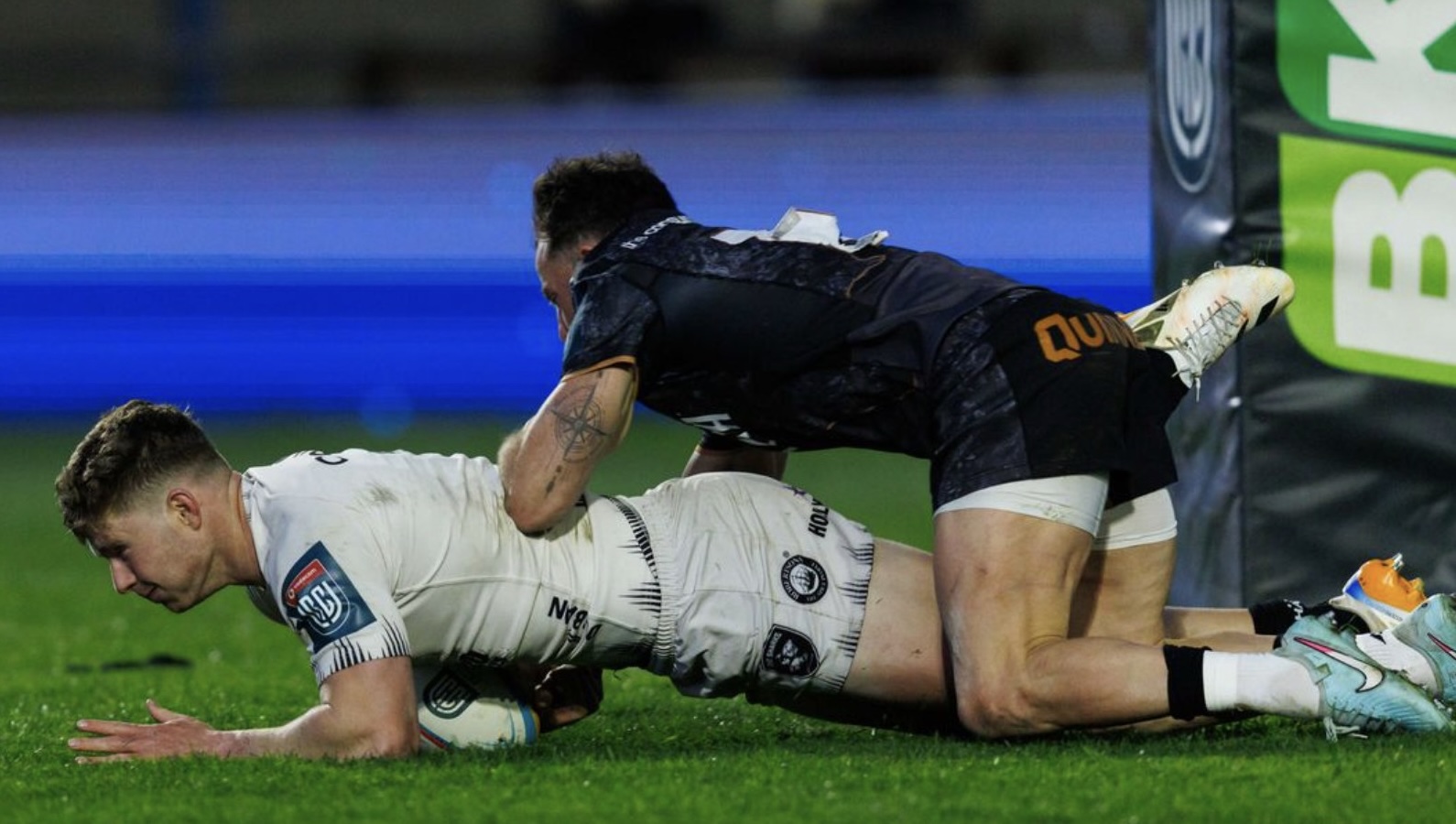
Controversy continues to swirl around a brutal incident involving Sharks centre Ethan Hooker during a recent Vodacom URC encounter in Swansea, after officials revealed their decision on the contentious tackle that left the 23-year-old with a serious shoulder injury. The incident has sparked heated debate across South African rugby circles, with questions mounting over player safety and the consistency of match-day officiating in the competition.
The drama unfolded in the closing stages of the first half when Hooker dotted down for a try after a spectacular sprint from deep within his own half. As the centre grounded the ball, Ospreys winger Luke Morgan – who was covering in defence – dived onto Hooker, an action that resulted in the Sharks player sustaining a dislocated shoulder. The incident immediately drew concern from the Sharks camp, prompting the franchise to lodge a formal review request with URC authorities.
What happened next has done little to quell the furore. According to sources within the URC hierarchy who spoke to our colleagues at IOL, the citing officer examined the incident and determined it did not warrant either a red or yellow card. “The citing officer involved reviewed the incident and found that it did not meet the red [or yellow] card threshold,” a URC official stated, before adding that whilst they understand “there are heightened opinions in these circumstances, we must respect the processes that are in place.”
URC citing decision leaves Morgan free to play as Hooker faces lengthy recovery
The ruling means Morgan faces no further sanction and remains available for selection as the Ospreys prepare for their next fixture against Cardiff. However, the decision has left many within South African rugby questioning the threshold for disciplinary action in the URC and whether player welfare is being prioritised adequately.
For Hooker, the news is far grimmer. The talented centre has returned to Durban, where medical specialists are currently conducting detailed assessments of the shoulder injury. Early indications suggest he faces a lengthy spell on the sidelines – somewhere in the region of three to four months – which represents a significant blow to both his franchise and the Springboks’ depth at centre.
This timeline couldn’t come at a worse moment for either party. The Sharks were building momentum in the competition, and losing a player of Hooker’s calibre creates a notable gap in their backline. For the national side, the injury removes another option from an already-stretched pool of centres as international commitments loom.
The incident itself has become something of a flashpoint in broader conversations about player safety in the URC. Questions are being asked about whether current protocols adequately protect players during high-speed play, and whether the citing process is keeping pace with the physicality of modern rugby. The decision to clear Morgan of any sanction suggests officials view the contact as incidental to the action of play, yet the severity of Hooker’s injury has many wondering if that assessment reflects the reality on the ground.
As we monitor developments in South African rugby, this situation underscores an ongoing tension within the sport between maintaining the physical intensity that makes rugby compelling and ensuring players aren’t exposed to unacceptable risk during match play. Whether the URC’s decision will stand as final, or whether further appeals might be lodged, remains to be seen.