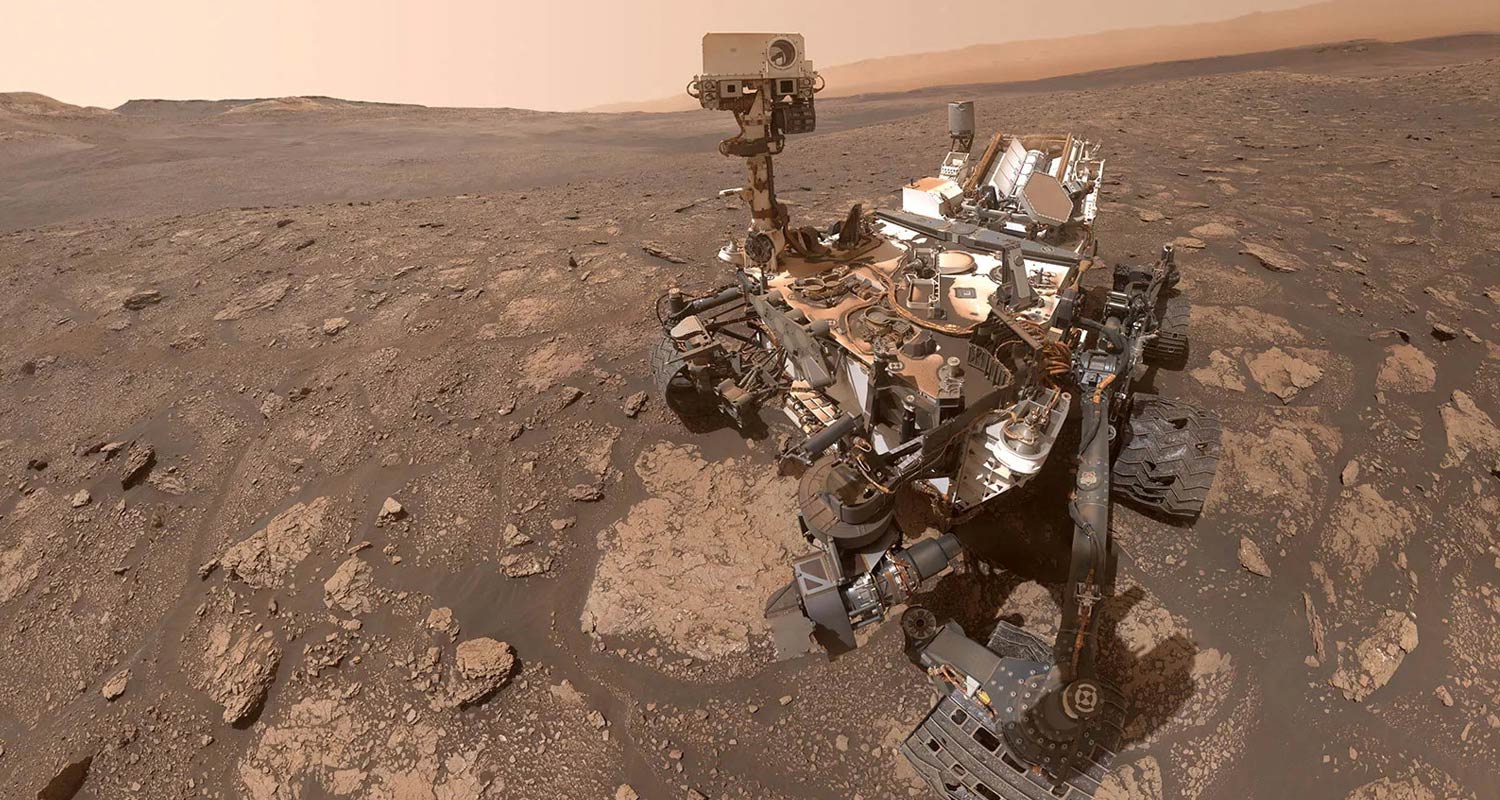
NASA’s Curiosity rover has made a groundbreaking discovery that pushes our understanding of Mars closer to answering one of humanity’s most profound questions: did life ever exist on the Red Planet? In what researchers are calling a pioneering experiment never before conducted beyond Earth, the six-wheeled rover has identified more organic compounds on Mars buried within ancient rock formations, offering tantalising new clues about the planet’s potential habitability billions of years ago.
The findings, published this week in the prestigious journal Nature Communications, reveal that five of seven organic compounds detected in a dried lakebed near Mars’s equator had never been identified on the Red Planet before. What makes this discovery particularly intriguing is a hint of another compound with a structure resembling DNA precursors—the very molecules that carry genetic information in all living things on Earth. Yet scientists are being appropriately cautious, emphasising that these organic compounds could have formed through purely non-biological chemical processes.
Organic compounds form the chemical foundation of life as we know it, and their presence on Mars significantly strengthens the case that our neighbouring planet once possessed the building blocks necessary for life. The total count of identified organic compounds on Mars now stretches into the dozens, a dramatic expansion from what we knew just a few years ago. As we look at this accumulating evidence, the picture of ancient Mars becomes increasingly compelling—a world vastly different from the cold, barren landscape we observe today.
The story of Mars’s transformation is crucial to understanding these findings. Approximately 4.5 billion years ago, when Mars first formed, the planet was considerably warmer and wetter than it is now. The rock sample analysed by Curiosity—sediment deposited by flowing water—dates back at least 3.5 billion years, placing it squarely in the period when life was just emerging on Earth. This timing alignment is hardly coincidental in the minds of astrobiologists studying these discoveries.
Amy Williams, an astrobiologist and planetary scientist from the University of Florida who leads the research team, was careful to frame the significance of their work without overstating conclusions. “We cannot yet say that Mars ever harboured life, but our findings further support the evidence that Mars was a habitable world around the time that life on Earth originated,” Williams explained in statements accompanying the research release. The distinction matters enormously in science—habitability doesn’t guarantee life existed, but it certainly creates the conditions where it could have thrived.
Organic compounds on Mars reveal complex chemical preservation in ancient bedrock
The Curiosity rover has been operating within the Gale crater since its dramatic landing in 2012, exploring what was once a vast impact basin on the Martian surface. The critical 2020 experiment took place in a specific region called Glen Torridon, where abundant clay minerals indicated that liquid water once flowed freely across the landscape. The choice of location was no accident—if microbial life ever emerged on Mars, aquatic environments would have been the obvious place to find it.
Clay minerals possess a remarkable property that makes them invaluable to this research: they preserve organic molecules far more effectively than other mineral types. This characteristic made Glen Torridon an ideal location for hunting organic compounds that might have survived billions of years of harsh Martian conditions. The rover’s sophisticated Sample Analysis at Mars (SAM) instrument conducted the groundbreaking experiment, drilling deep into bedrock at a site named Mary Anning—honouring a 19th-century English paleontologist whose fossil discoveries revolutionised our understanding of ancient life.
The methodology was elegantly straightforward yet powerful. Curiosity pulverised the drilled rock sample into powder and deposited it into a small container holding a chemical compound specifically designed to break down complex organic matter into smaller, detectable fragments. What emerged from this process astonished researchers: larger macromolecular carbon structures were not only present but had managed to survive despite Mars’s brutal surface radiation environment. Alongside these complex molecules came smaller organic compounds that represented new discoveries for Martian science.
“This study confirms that larger and more complex organic matter is present and preserved in the near surface of Mars bedrock despite the planet’s harsh radiation conditions,” Williams stated, emphasising the significance of organic preservation in such an inhospitable environment. The fact that delicate organic molecules could withstand Mars’s radiation-saturated surface for billions of years opens new possibilities for what other chemical signatures might still be discoverable in subsurface rocks. It fundamentally changes how scientists should approach future exploration missions searching for evidence of ancient Martian microbiology.
The implications extend beyond mere chemical cataloguing. Curiosity was fundamentally designed with a specific mission: to identify habitable environments on Mars—places where, if life ever did arise, it would have possessed the necessary conditions to survive and potentially flourish. This latest discovery contributes powerfully to that overarching narrative. The rover’s data consistently demonstrates that ancient Mars wasn’t simply a barren, lifeless wasteland but rather a world with the fundamental ingredients necessary for life as we understand it.
Recent developments from NASA’s Perseverance rover, operating in a different Martian crater, have added another intriguing layer to this scientific puzzle. Last year, researchers announced that a rock sample collected by Perseverance contained features that might have been created through chemical reactions involving microbes during rock formation. While these findings remain preliminary and require careful verification, they suggest that multiple rovers are converging on evidence pointing toward past habitability and potentially past life itself.
The pathway forward requires boldness matched with scientific rigour. Williams acknowledged the limitations of current methodologies: “Although we cannot tell if this organic matter came from geologic processes, infall from meteorites, or life, our work suggests that if complex organic matter from life were preserved on Mars, we should be able to detect it with current and upcoming rover instruments.” This statement represents both humility about what we don’t yet know and confidence in the tools and technologies we’ve developed to answer these fundamental questions about our universe.
Definitively proving that life once existed on Mars will ultimately require a more direct approach than rovers currently permit. Scientists acknowledge that bringing rock samples back to Earth for comprehensive laboratory analysis represents the essential next step. Such a mission would allow researchers to conduct experiments impossible to perform on the Red Planet, potentially resolving the ambiguity that currently surrounds these fascinating organic discoveries.
The discoveries from Curiosity remind us that planetary exploration isn’t merely about accumulating data points—it’s about reconstructing the deep history of other worlds and understanding our place within a cosmos far more complex and potentially populated than previous generations imagined. Each organic compound detected, each clay mineral analysed, each grain of ancient Martian dust studied brings us incrementally closer to answering whether Earth’s life represents a unique cosmic accident or part of a broader pattern of habitable worlds across our solar system and beyond.