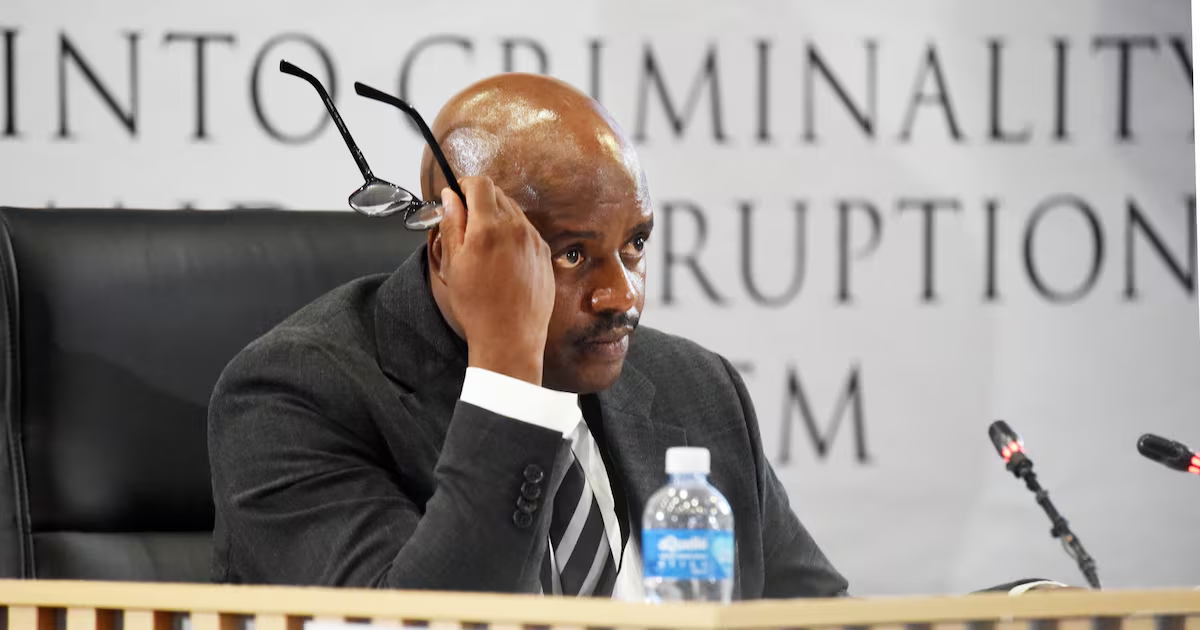
The suspended Ekurhuleni Metro Police Department (EMPD) deputy chief, Julius Mkhwanazi, has publicly rejected any connection to the brutal kidnapping and assault suffered by the department’s spokesperson, Kelebogile Thepa, earlier this year. The incidents, which took place in July 2024, saw Thepa attacked, forcibly taken and even threatened with a firearm. In a recent hearing before the judicial commission investigating the matter, Mkhwanazi insisted the accusations were unfounded and labeled the claims against him as a “character assassination”.
We at SA Report have been tracking the saga since Thepa first appeared before the commission, alleging that her harassment was linked to the way she handled queries about the infamous “blue lights” controversy involving Mkhwanazi and alleged cartel figure Vusimusi “Cat” Matlala. Thepa told investigators she believed the attacks were retaliation for her probing of how the EMPD allegedly fitted illegal blue‑light equipment to private vehicles.
During the same hearing, Mkhwanazi turned the tables, accusing Thepa of fabricating her emotional response. “She faked her tears,” he claimed, suggesting the spokesperson was trying to manipulate the commission’s perception of the case. The deputy chief’s outburst hinted at deep personal turmoil, with the police officer lamenting that his children now see a “kidnapper [father]” on social media. He insisted his actions never mirrored the violent tactics alleged by Thepa.
The commission’s focus, however, extends beyond the alleged kidnapping. Investigators are also probing whether Mkhwanazi misled the panel when he sought a postponement of his appearance, citing his mother’s funeral as the reason. On the surface, the request seemed legitimate: Mkhwanazi supplied a funeral programme and supporting paperwork. Yet, advocate Sello Mahlape flagged inconsistencies that raised serious doubts.
Mahlape noted that Department of Home Affairs records indicated the deceased listed on Mkhwanazi’s documents was merely ten years older than the deputy chief himself – an implausible age gap for a mother‑son relationship. “The person was only ten years senior to him,” she said, outlining how the discrepancy surfaced only after the postponement had been granted and the commission reviewed the documentation.
Further scrutiny revealed the name on the death certificate corresponded to a woman who, according to Mkhwanazi’s birth certificate, was actually his grandmother. In response, the former deputy chief argued that the woman he referred to as his mother had, in fact, been a step‑mother who raised him after his grandparents could no longer care for him. “I didn’t lie,” Mkhwanazi asserted, “she raised me, so I consider her my mother.” He promised to submit additional evidence to substantiate his claim, hoping to clear the cloud of alleged deception.
The commission’s legal team, however, remains unconvinced. Mahlape argued that Mkhwanazi deliberately misrepresented the facts to secure an extension and avoid appearing before the panel. “He knew the woman who died was not his mother,” she told the commission, emphasizing that the timing of the postponement – granted just before the documents were cross‑checked – was suspicious. The panel’s next steps will likely involve a deeper forensic audit of the submitted paperwork.
Beyond the postponement controversy, Mkhwanazi faces serious allegations of fraud tied to the “blue lights” scandal. Prosecutors allege he authorised the illegal fitting of emergency‑style blue lights on vehicles owned by Matlala’s security firm, a move that would give the private fleet the same visual priority as official emergency services. Moreover, they claim the deputy chief supplied forged letters purporting a memorandum of understanding between Matlala’s company and the City of Ekurhuleni – a document that, if genuine, would have legitimised the illicit modifications.
The “blue lights” issue has already sparked public outrage across Gauteng, with motorists complaining about confusion on the roads and anti‑corruption watchdogs demanding accountability from municipal officials. If Mkhwanazi is found complicit, the ramifications could extend to a broader overhaul of how the city regulates private security fleets, an area historically plagued by lax oversight and political patronage.
Julius Mkhwanazi denies involvement in kidnapping of EMPD spokesperson
Amid the swirling allegations, the suspended EMPD deputy chief has maintained that he never ordered, nor condoned, any action against Thepa. In his defence, he highlighted his long service record within the Ekurhuleni Metro Police and suggested that political rivals might be exploiting the “blue lights” controversy to undermine his standing. “My reputation has been badly dealt with,” Mkhwanazi told the commission, invoking the personal toll the scandal has taken on his family.
Our sources indicate that the commission is expected to deliver an interim report within the next few weeks. That document will likely address both the alleged kidnapping and the questionable postponement request, as well as the broader fraud allegations. If the findings confirm Mkhwanazi’s misconduct, the magistrate could impose contempt of court penalties, potentially leading to further suspension or even criminal charges.
The unfolding drama underscores the challenges faced by South African law‑enforcement agencies in maintaining public trust while navigating internal power struggles. Residents of Ekurhuleni have expressed frustration, urging faster action to root out corruption that seemingly permeates municipal departments. Community leaders have called for transparent investigations, warning that any perception of impunity could erode confidence in the police service at a time when safety remains a top national priority.
As we reported earlier, the EMPD’s internal affairs division has already launched a parallel probe into the deputy chief’s conduct, signalling that the fallout may not end with the commission’s findings alone. While Mkhwanazi vows to fight the accusations, the weight of the evidence presented by Mahlape and the commission’s own inquiries may prove decisive.
The saga of Julius Mkhwanazi and the “blue lights” scandal continues to dominate headlines in Gauteng, reflecting both the complexities of South Africa’s policing landscape and the heightened public demand for accountability. Regardless of the final verdict, the case will likely serve as a benchmark for how future allegations of police misconduct and corruption are handled in the country’s municipal bodies.
In the coming days, we will keep monitoring court filings, commission updates and statements from both parties, ensuring our readers stay informed about the developments that could reshape the integrity of the Ekurhuleni Metro Police Department.