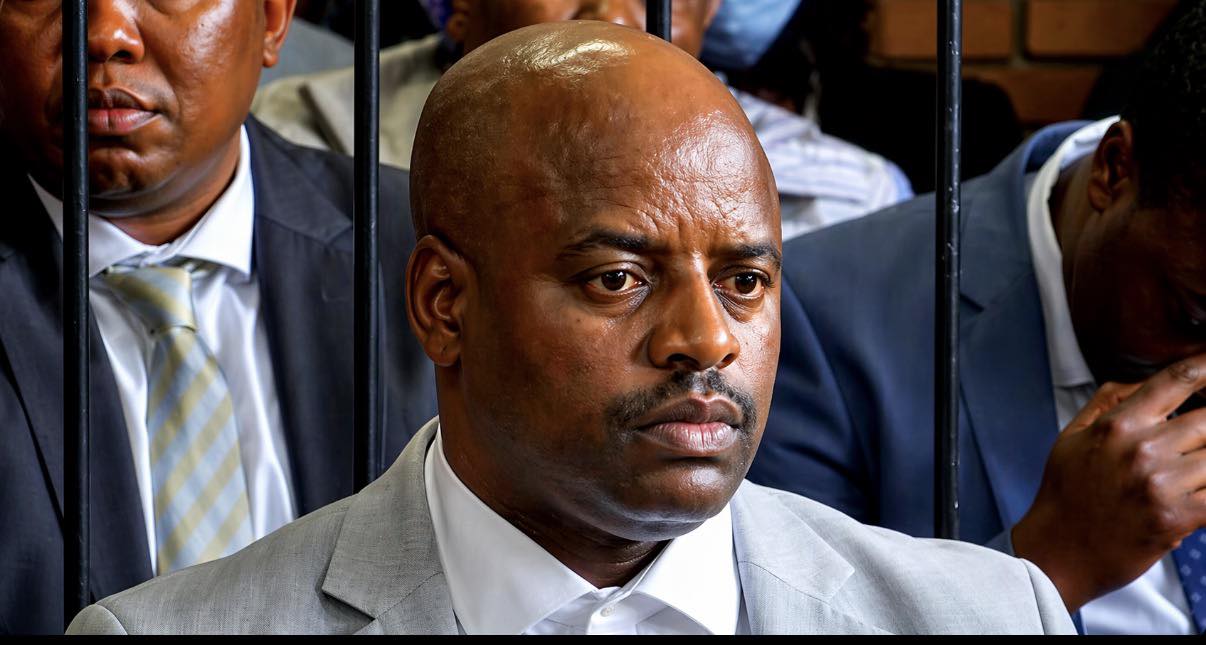
The bail application of suspended Ekurhuleni Metropolitan Police Department (EMPD) deputy chief Julius Mkhwanazi continues to dominate courtroom proceedings in Boksburg, where he’s mounted a detailed defence against accusations of fraud and corruption. During testimony at the Boksburg Magistrates’ Court, Mkhwanazi disclosed his financial position to establish roots in South Africa, claiming a monthly salary of R65,000 and an anticipated pension payout of R7 million upon retirement. These figures form part of his broader argument that he poses no flight risk and should be released on bail pending trial.
The suspended police official’s legal team has emphasised his deep ties to the country, suggesting his substantial pension entitlements and ongoing employment relationship make absconding illogical. Beyond financial considerations, Mkhwanazi’s counsel has also raised personal health matters, noting that he manages Type 2 diabetes — a factor they argue warrants careful consideration in the court’s assessment of his detention conditions. It’s a strategy commonly deployed in South African bail applications, though courts typically balance such claims against the gravity of charges and flight risk concerns.
Mkhwanazi stands accused alongside Ekurhuleni City Manager Kagiso Lerutla, and the pair face serious charges including fraud, corruption, and defeating the ends of justice. The charges stem from a troubling incident in 2019, when investigators alleged that Lerutla paid R400,000 to someone to impersonate him in court proceedings. It’s the kind of allegation that strikes at the heart of judicial integrity and municipal governance, raising questions about the extent to which public officials may have circumvented legal processes.
The circumstances surrounding Mkhwanazi’s arrest on 18 April 2026 have also become focal points in bail arguments. When police executed a search at his residence, officers discovered a substantial cache of state ammunition, which prosecutors regard with concern. Mkhwanazi’s defence has countered that the ammunition was stored legally and presents no danger, attempting to defuse what could otherwise appear as an aggravating factor in sentencing considerations or bail assessments.
Mkhwanazi’s Bail Application Under Scrutiny Amid Fraud Allegations
The state’s opposition to bail demonstrates prosecutors’ confidence in their case and their assessment of Mkhwanazi as a flight risk, despite his claims of financial stability and community ties. Our reporting from Boksburg shows that magistrate proceedings have been closely followed by media observers and court-watchers concerned about the integrity of municipal leadership in Ekurhuleni. The municipality has faced sustained criticism over governance failures, and high-profile prosecutions of senior officials inevitably attract public scrutiny.
What makes this case particularly significant is the intersection of municipal governance, police leadership, and allegations of judicial corruption. When a deputy police chief stands accused of involvement in schemes designed to evade court appearances, it raises uncomfortable questions about institutional oversight and accountability mechanisms within law enforcement. The EMPD, already under considerable pressure to reform its operational practices, now faces additional reputational damage from one of its senior officers’ legal troubles.
The R400,000 payment alleged in the original 2019 incident remains a key piece of evidence prosecutors will rely upon. Court documents paint a picture of deliberate circumvention of legal processes, suggesting that Lerutla sought to avoid court attendance through impersonation rather than engaging with the judicial system legitimately. Mkhwanazi’s alleged involvement in facilitating or concealing this arrangement forms the basis of his fraud and corruption charges.
Financial disclosures made during bail applications often reveal tensions between a defendant’s stated assets and their apparent lifestyle. In Mkhwanazi’s case, the R7 million pension expectation represents a significant financial stake in remaining in the country, theoretically supporting arguments against flight. However, prosecutors will likely argue that individuals facing substantial criminal convictions may be motivated by desperation rather than rational financial calculation, making asset declarations less reliable as flight-risk indicators.
The ongoing hearing keeps both accused individuals in legal limbo, unable to return to their positions pending resolution. For Ekurhuleni’s operational capacity, their suspension represents a leadership vacuum in critical departments. The city’s municipal leadership and governance structures have been disrupted by these proceedings, adding administrative complications to the substantive legal questions at play.
As we continue following this case, the court’s eventual bail decision will signal how seriously judicial authorities take allegations of this nature. Whether Mkhwanazi and Lerutla ultimately secure release pending trial or remain in custody will depend on how the magistrate weighs their personal circumstances against prosecutorial arguments and the strength of evidence presented. The case remains a significant marker in South Africa’s ongoing battle against corruption within municipal and law enforcement institutions.