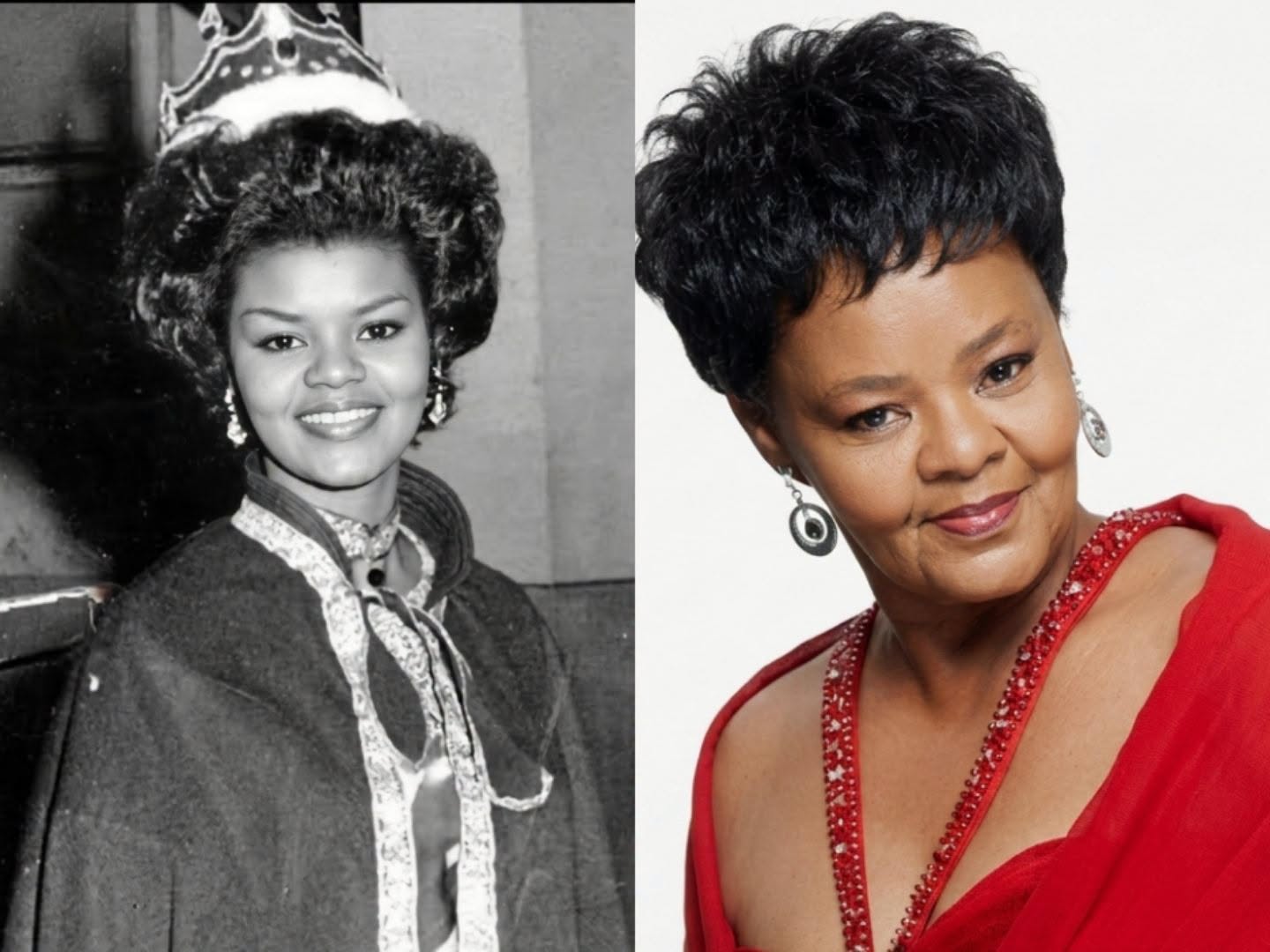
The entertainment and television world has lost a remarkable trailblazer with the passing of Cynthia Shange, a woman who shattered barriers in South African media and left an indelible mark on the country’s cultural landscape. The first Black Miss South Africa and accomplished actress died today at a hospital in KwaZulu-Natal, with her family confirming she was 76 years old. Her death marks the end of an era for many South Africans who grew up watching her on screen or admired her pioneering journey through an industry that was far less welcoming to Black women when she began her career.
Shange’s legacy extends far beyond her own achievements in entertainment. She is perhaps equally remembered as the mother of television presenter Nonhle Thema, who has carried forward her mother’s commitment to excellence in broadcasting and media. The relationship between mother and daughter represents a continuum of achievement in South African television, with both women commanding respect and admiration within the industry. Nonhle’s prominence as a media personality is a testament to the strength and determination she inherited from her mother, who paved the way during far more challenging times.
Remembering Cynthia Shange: South Africa’s pioneering Black Miss South Africa
What made Cynthia Shange truly exceptional was her willingness to step into spaces that hadn’t been designed for her. As the first Black Miss South Africa, she challenged the status quo during an era when beauty pageants were among the most visible platforms for representation in the country. Winning this title wasn’t merely a personal achievement—it represented a significant shift in how South African society viewed beauty, identity, and the representation of Black women in the public eye. At a time when such victories were rare, her crown carried immense symbolic weight.
Beyond the pageantry, Shange established herself as a serious actress, refusing to be pigeonholed by her Miss South Africa crown. She appeared in various productions that showcased her range and commitment to her craft, earning respect as a performer rather than simply a beauty pageant winner. This career trajectory was important; it demonstrated that Black women could move seamlessly between different areas of entertainment and be taken seriously in each endeavour. Her acting work, though perhaps less documented than her pageant history, contributed meaningfully to South African television and film.
The news of her passing has understandably resonated deeply across the country. Social media has filled with tributes from viewers who remember watching her on screen, colleagues who worked alongside her, and family friends who knew her personally. Many have reflected on what her presence meant during their own formative years—a visible reminder that achievement was possible, that barriers could be broken, and that one person’s determination could inspire generations to come. The outpouring of remembrance speaks to the genuine affection and respect she earned throughout her life.
Cynthia Shange’s contribution to South African media cannot be overstated. She lived through decades of profound change in the country, and she herself was an agent of that change rather than a passive observer. Her career choices, her visibility, and her refusal to accept limitations set an example that many young women in entertainment have followed. The first Black Miss South Africa didn’t merely win a title—she helped redefine what that title could mean and who could wear it with pride.
As South Africa mourns her loss, her family, particularly her daughter Nonhle Thema and the broader television community, will be processing the loss of a woman who meant so much to so many. The impact she made during her lifetime will continue to resonate, and her story remains an important chapter in the evolution of representation within South African media. Cynthia Shange leaves behind a legacy of courage, excellence, and the quiet determination of someone who knew that her presence itself was a form of progress.